
CWCSEO issues press release on International Day of Zero Tolerance for FGM/C
February 6th is the International Day of Zero Tolerance of Female Genital Mutilation/Cutting, a day designed to promote the elimination of Female Genital Mutilation/Cutting by 2030 through efforts to engage whole communities and focus on human rights, gender equality and attention to the needs of women and girls who suffer from its consequences. The United […]
Session on FGM at the workshop Nayi Dishayein- Rethinking Development
By Mohammad Chappalwala Gender-based violence takes many forms. One of the most extreme, I think, is female genital cutting/mutilation (FGM/C), which causes harm to the youngest and most vulnerable members of our society. Being a male member of a community that practices this, I believe it is my responsibility to spread awareness regarding this harm […]
The impact of Bhaiyo: How male allies work to end female genital cutting
Today, on International Day of Zero Tolerance for Female Genital Mutilation/Cutting, Sahiyo is proud to release our program impact report, Bhaiyo: A Male Ally Initiative to Support Ending Female Genital Cutting. The report spans the duration of our Bhaiyo program, from its creation in February 2021 through December 2022, and covers our challenges, lessons learned, […]
Self-love to Sunera
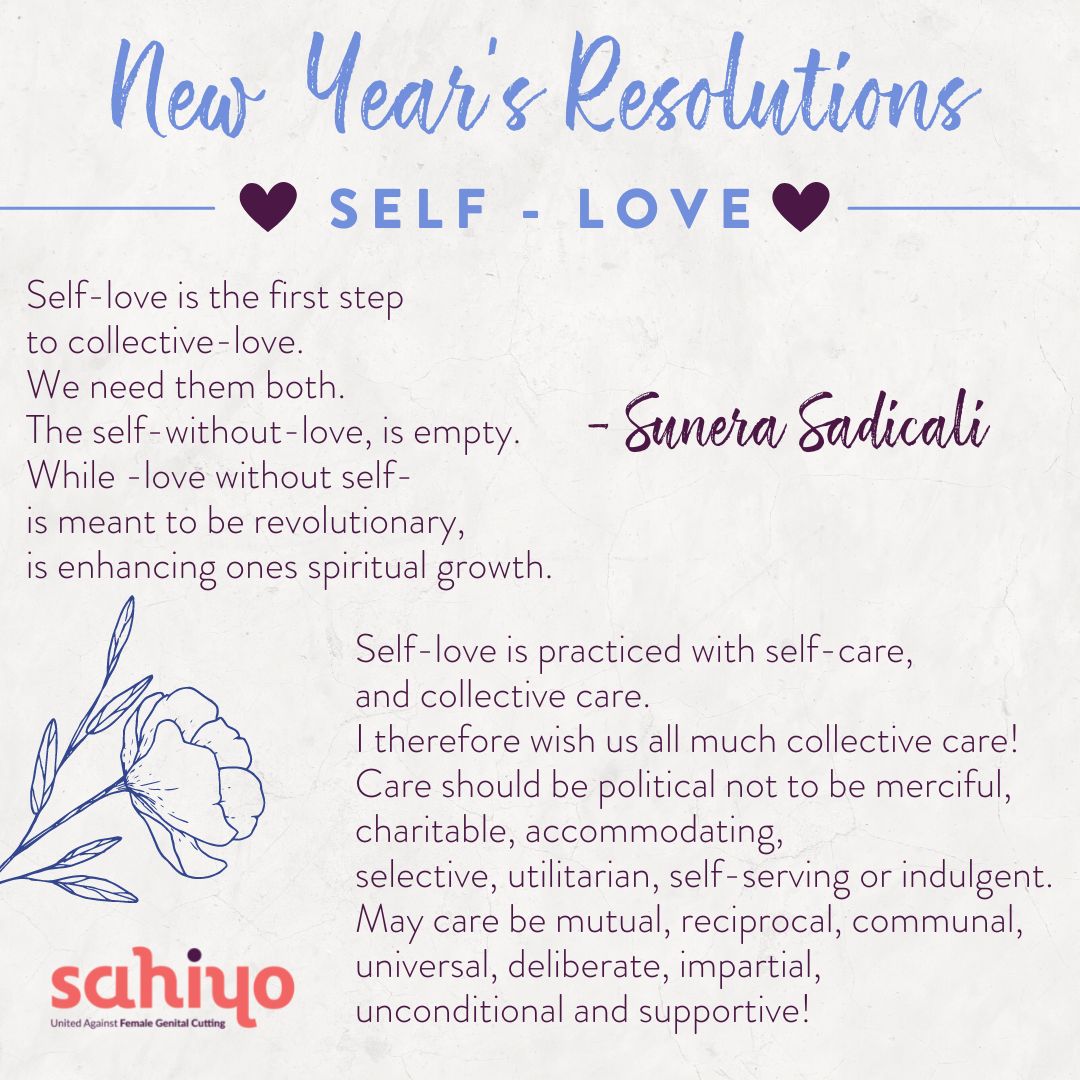
Portuguese/English Version O Amor-próprio évoltar à tua infância, e enfrentar os monstros na cara.É dizer em alto e bom som,já basta.É fazer das tuas entranhas,poesia deliberada.É permitir-te existir sem atalhos,nem rimas que outros compõem para ti. Self-love is the first stepto collective-love.We need them both.The self- without -love,is empty.While -love without self-is meant to be revolutionary,is […]
Self-love to Olachi
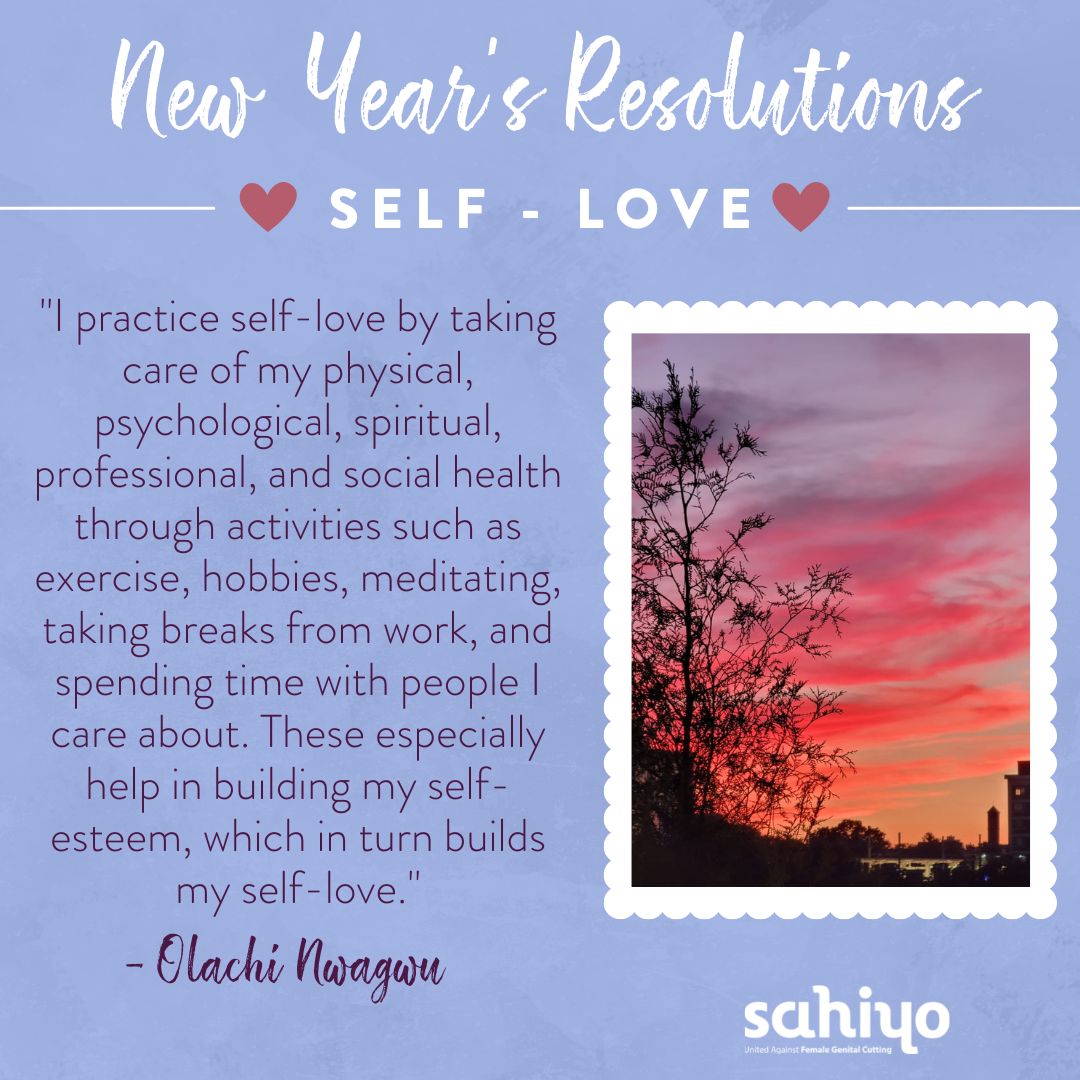
By Olachi Nwagwu What does self-love mean to you? In bell hooks’ book All About Love, she defines love as an action, not a feeling. She explores love as a combination of “trust, commitment, care, respect, knowledge, and responsibility.” So based on this, my definition of self-love would be that combination of trust, commitment, care, […]
The hearing for Washington Senate Bill 5453 concerning female genital mutilation/cutting

On Monday, January 30th at 10:30am PST, SB 5453 concerning female genital mutilation/cutting (FGM/C) will be called for a hearing by the Washington state Law and Justice Committee. The bill, which was only introduced on January 18th, aims to: create a private right of action for survivors of FGM/C; prohibit providers from performing FGM/C on […]
Self-love to Sushma
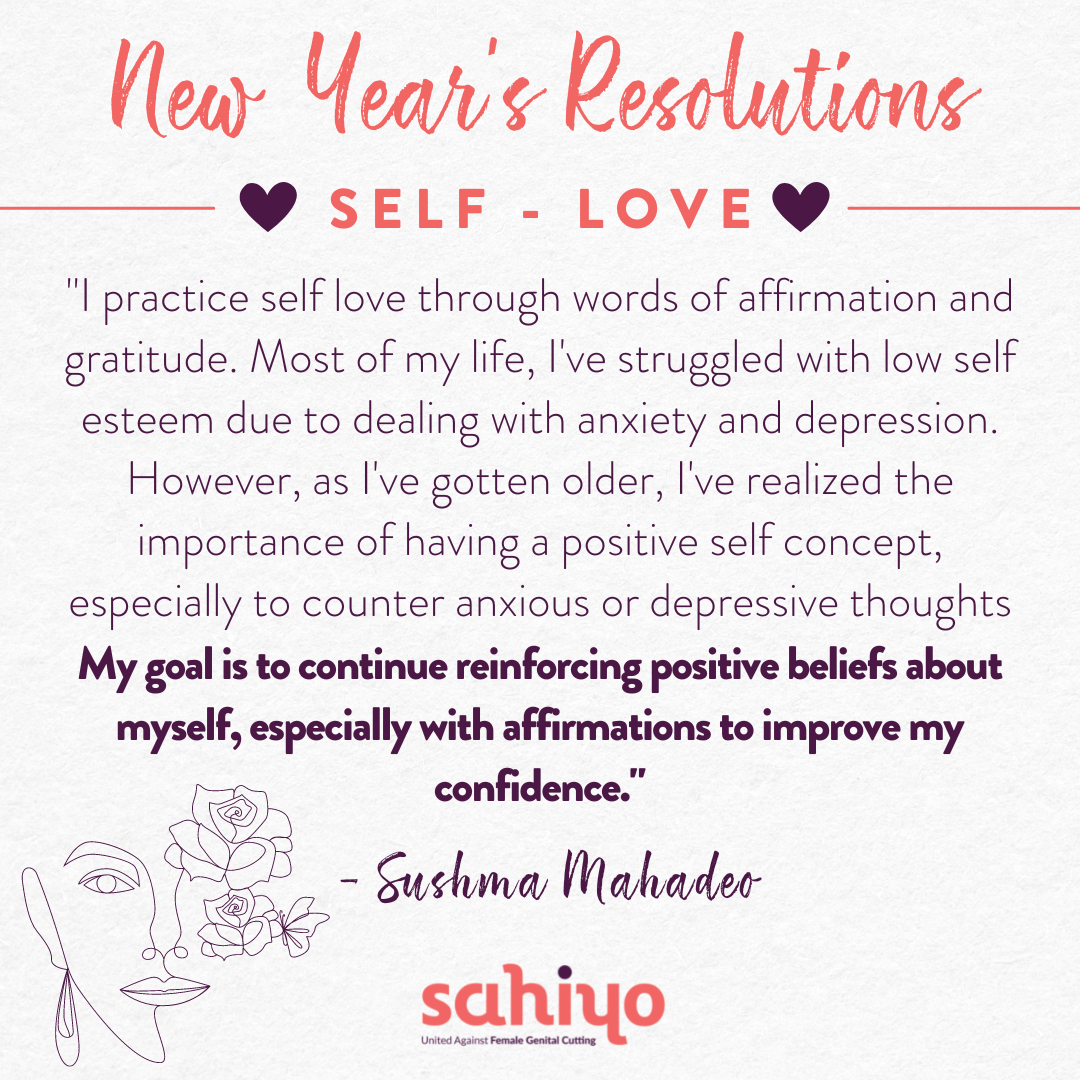
By Sushma Mahadeo What does self-love mean to you? To me, self-love is about loving yourself unconditionally. It means being proud of yourself on your good and bad days. It’s about being able to look in the mirror and fully accept and like who you are, even if you have insecurities. It’s knowing that you […]
Volunteer spotlight: Naquia
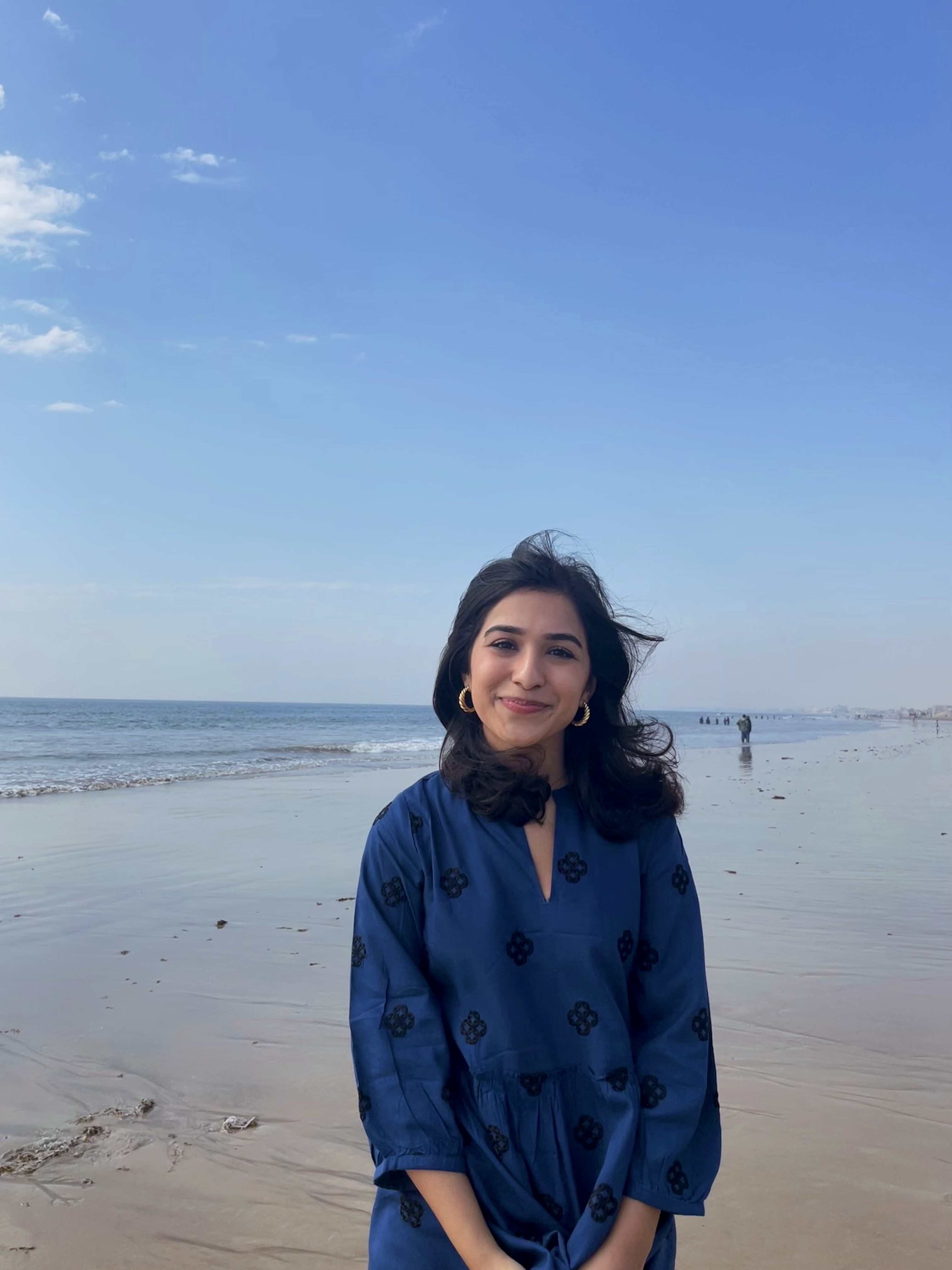
Naquia is a Research Associate at Cornell University where she studies public health policy, homelessness, and health inequities. She recently graduated from the University of Michigan with a degree in Public Health and a minor in Spanish. She is passionate about destigmatizing sexual and reproductive health, supporting immigrant and refugee communities, and promoting cultural humility […]
Self-Love & Body Image
By Trisha Kini Body image, which is closely tied to mental health and general wellbeing, refers to the way one perceives their body and the positive, negative, and/or neutral feelings that arise from that perception. Whether it is in relation to skin, hair, or the shape/size of a body part, body image influences people in […]
Sahiyo is now on Tik Tok!
Tik Tok presents a new way to engage with an audience and educate others, which is why we are excited to bring Sahiyo to this platform! We will share valuable, inspiring, and educational content to raise awareness about female genital cutting (FGC), as well as uplift survivors’ stories, with the hopes of reaching many more […]