
HOPE MA Presenting at the Ounce of Prevention Conference
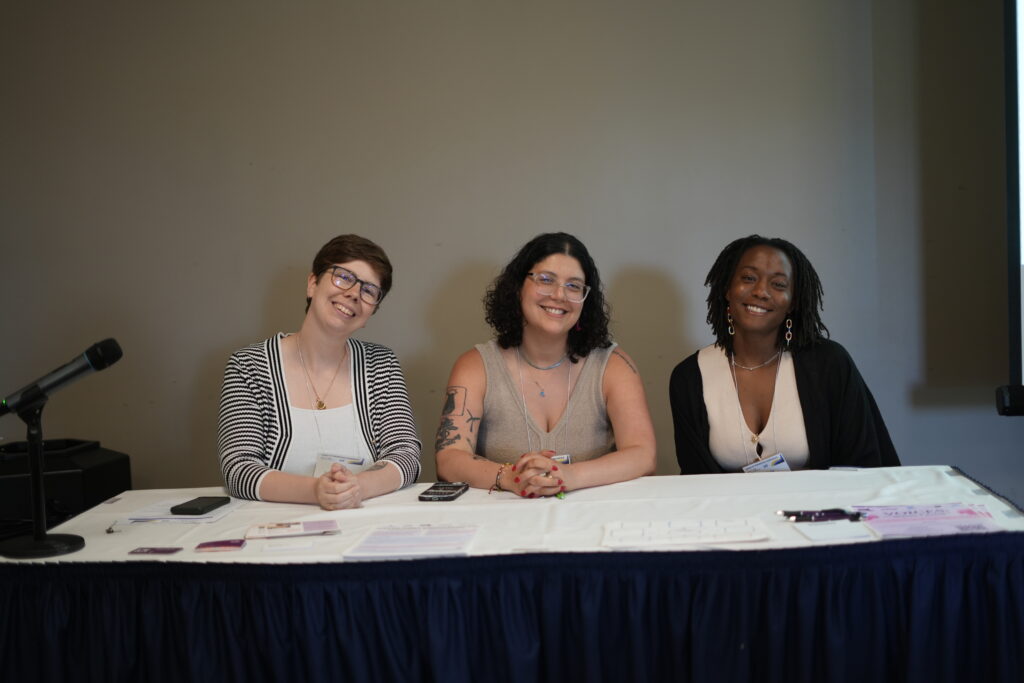
On June 17, 2026, HOPE MA hosted one of several afternoon workshops at the annual Ounce of Prevention Conference, held by the Massachusetts Department of Public Health’s Bureau of Community Health and Prevention, at the DCU Center in Worcester. This year’s theme, “Prevention Along the Stream: Collaboration and Connection to Build Healthy Communities,” brought together […]
Reflecting on the New England Sex Education Conference
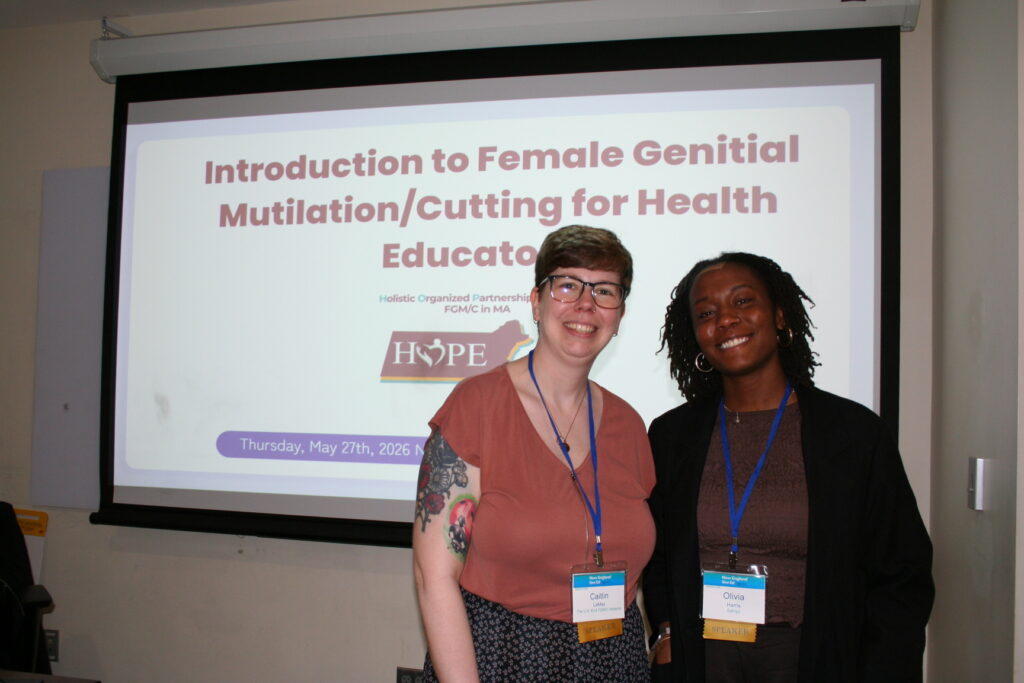
By: Olivia Harris On May 27th, 2026, the HOPE MA team presented a workshop titled “Introduction to Female Genital Mutilation/Cutting (FGM/C) for Health Educators” at the New England Sex Education Conference (NESEC), a regional gathering bringing together health educators, school-based practitioners, and community-based advocates from across the region. The 60-minute workshop drew a diverse audience […]
Washington State SANE Training: Best Practices for Working with Survivors of Female Genital Mutilation/Cutting
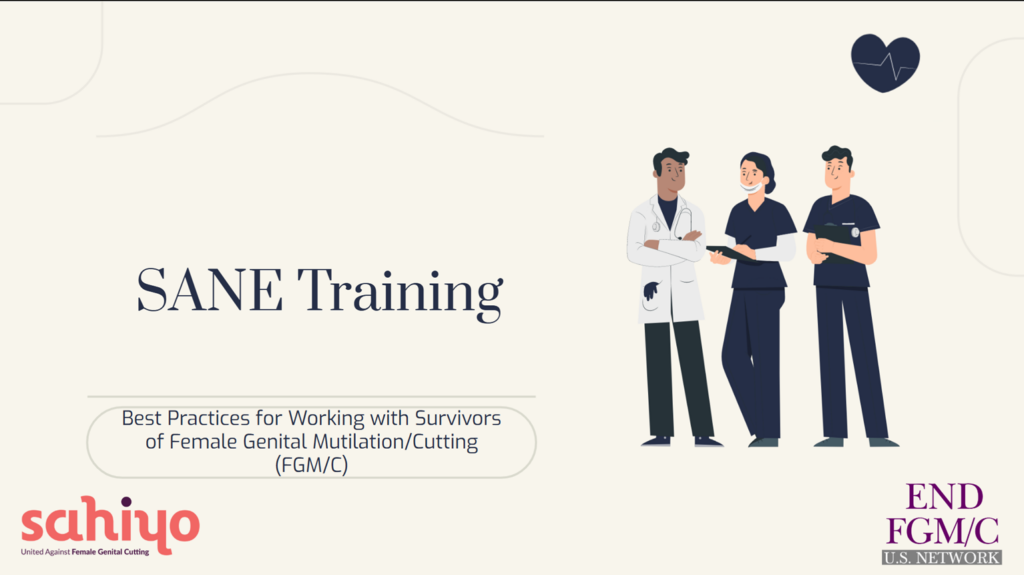
On June 18th, Sahiyo and the U.S. Network to End FGM/C facilitated a 90-minute training designed specifically for Sexual Assault Nurse Examiners (SANEs) in Washington State, focusing on building knowledge and information around female genital mutilation/cutting, (FGM/C), in Washington State, and supporting best practices for working with survivors of FGM/C. For SANEs in Washington State, […]
Navigating Complexity: Understanding and Addressing Challenges Faced by Kurdish Women with FGM/C
By Osman Mahmoudi UNICEF reports that FGM/C remains prevalent in Iraqi Kurdistan, affecting over half of women who live there. The profound impact of this practice requires urgent medical and psychological support for survivors. However, a lack of specialized professionals in the region, and limited awareness of treatment options and complications, pose challenges. Cultural taboos and social […]
Training the Prince George’s County Health Department on FGC
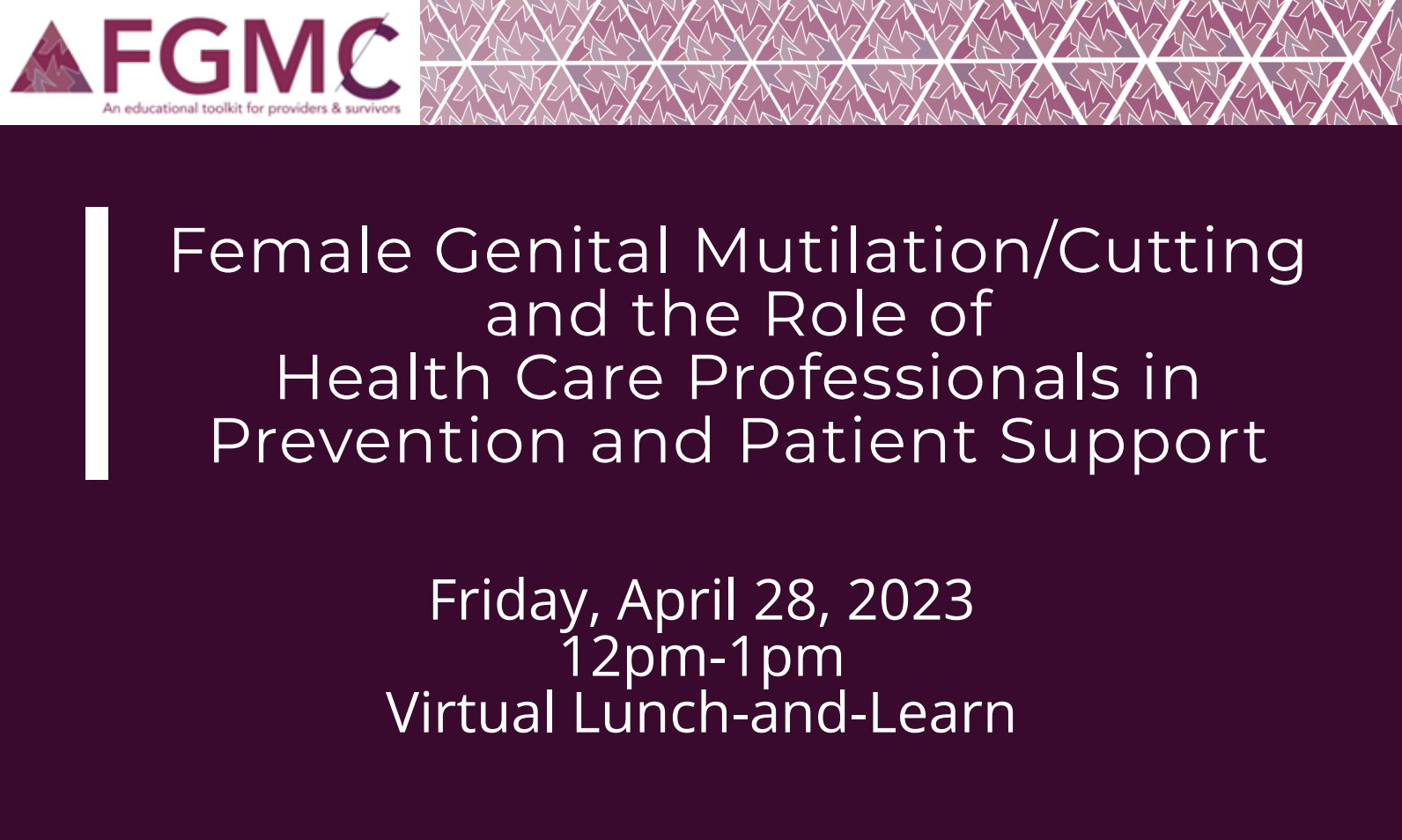
On April 28th, Karen McDonnell, Associate Professor at George Washington University’s Milken Institute School of Public Health partnered with Sahiyo Cofounder Mariya Taher to provide a training for nearly 70 health care providers at the Prince George County Health Department on female genital cutting (FGC) and the role of health care professionals in prevention and […]
Exploring Canadian physicians’ experiences providing FGC-related care
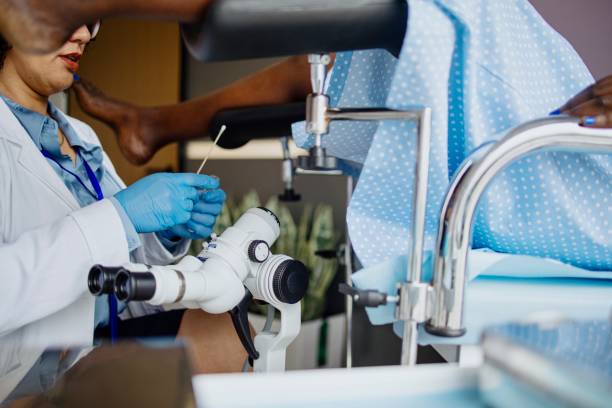
By Kiah Leone As countries like the United States, Canada, Australia, and others become increasingly aware of the practice of female genital cutting (FGC) and its presence in their country, their healthcare systems are having to explore what support and quality services for survivors of FGC entail. Medical studies conducted across many of these countries […]
Female Genital Mutilation/Cutting (FGM/C): A survey of knowledge, attitudes, and practices of health care professionals in urban/ rural India

Female genital mutilation/cutting (FGM/C) has been performed on an estimated 200 million women and girls worldwide. Health care professionals play a significant role in the prevention of FGM/C. They can support and educate patients and communities about the advantages of ending the practice. However, health care professionals (HCPs) frequently lack the resources and education required […]