

Sleeping researchers and lack of data on female genital cutting in Pakistan
By Huda Syyed Two decades ago, I flipped through Reader’s Digest to distract my mind from schoolwork and the sweltering summer heat of Pakistan. My eyes glanced at the brief excerpt displayed mid-page with a glossy picture of a famous Somalian model, Waris Dirie. She exuded a sense of resilience, and I knew there was […]
SEVEN, the first novel of its kind to address female genital cutting in the Bohra community, releases this month

SEVEN is being released in North America this September (Sept 5 Canada/Sept 29 U.S.). The novel sensitively addresses women’s relationships, sexuality, infidelity, intergenerational violence, religion and healing sexual trauma within the context of the Dawoodi Bohra (sub-sect of Shia Islam) community. This is the first novel of its kind to address female genital cutting in the Bohra […]
Population Council hosts webinar to discuss ending female genital cutting

By Hunter Kessous The Population Council hosted a fascinating webinar, Using Research to Understand and Accelerate The Abandonment of Female Genital Mutilation/Cutting (FGM/C). It was the second of two webinars from a series titled, Evidence to End FGM/C: Research to Help Girls and Women Thrive. The most recent webinar reported some of the findings of […]
Protecting the girl child: The need for an anti-FGM law in India
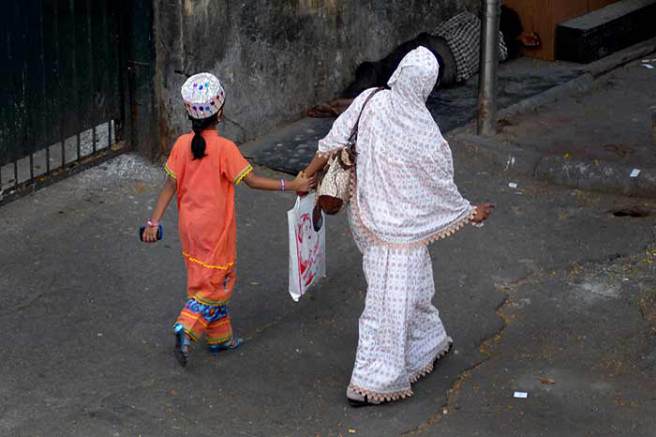
By Anjali Shah “Girls are not property. They have the right to determine their destiny.” – Anthony Lake, Former Executive Director, UNICEF Religious dogmas have gained focus with women coming forward to challenge the subversion and repression that they have been subjected to for decades. This has brought into the limelight the practice of female […]
Understanding the effect of COVID-19 on gender-based violence in Nigeria

By Hunter Kessous In response to the COVID-19 pandemic, Hidden Scars and Magool have teamed up to offer biweekly webinars that amplify the voices of the grassroots organizations working to protect girls and women at this time. On June 9th, the third installment of the Africa Led Movement series addressed the effect of the pandemic […]
How COVID-19 impacts programs devoted to ending gender-based violence, including female genital cutting

By Hunter Kessous The COVID-19 pandemic has turned the world upside down, so it is unsurprising that gender-based violence (GBV), including female genital cutting (FGC), has also been affected. Hidden Scars and Magool came together to co-host the Africa Led Movement Webinar series. In May, I had the pleasure of attending the second part of […]
Why human rights education, including FGC, is crucial for American classrooms

By Hunter Kessous Throughout high school, whenever I would tell people about my future goals to help survivors of female genital cutting (FGC), nine times out of ten the response would be, “What is FGC?” This is a question I never minded. As a human rights advocate, I’ve always taken the opportunity to educate my […]
Population Council hosts second webinar on FGM/C research
By Hunter Kessous The Population Council recently hosted a fascinating webinar, “Using Research to Understand and Accelerate The Abandonment of Female Genital Mutilation/Cutting (FGM/C).” It was the second of two webinars from a series titled, “Evidence to End FGM/C: Research to Help Girls and Women Thrive.” The most recent webinar reported some of the findings of […]
Population Council hosts webinar highlighting research on FGM/C

By Hunter Kessous On May 14th, the Population Council hosted the first of two webinars comprising a series titled, “Evidence to End FGM/C: Research to Help Girls and Women Thrive.” Beginning in 2015 and culminating this year, the Population Council has led a research consortium spanning eight countries that studied the practice of female genital […]
Farzana Esmail hosts fireside chat on FGC with co-founder of Sahiyo

By Hunter Kessous Mariya Taher, U.S. Executive Director and co-founder of Sahiyo, and Farzana Esmail, survivor, mother and advocate, sat down together to have a virtual fireside chat on female genital cutting: part interview, part sincere exchange of stories, and part education. Upon introducing Mariya’s background, Farzana asks her to call on her expertise to […]