
Karishma is a recent graduate from UC Berkeley with a B.A. in Sociology and Public Policy. Later this fall, she plans to pursue a J.D. focused on the intersection of health advocacy, law, and policy. Karishma is passionate about improving access to health care and has previously worked in the health nonprofit sector related to Medicaid policy.
How did you first hear about Sahiyo?
I first heard about Sahiyo when I came across their Policy Intern posting on Handshake. After clicking on the description to read more about this role and Sahiyo’s mission, I combed through Sahiyo’s website, where I learned more about the organization’s previous work. Sahiyo’s commitment to policy as a tool for advocacy and dedication to uplifting survivor voices deeply resonated with me, as it connected to my interests in human rights and policy.
What was your experience of learning about female genital cutting (FGC) for the first time?
Learning about female genital cutting through my internship has been eye-opening for me. I had previously heard about FGM/C, but through my work with Sahiyo, I have been able to dive deeper into the current policy landscape surrounding the issue in the United States, learning about state-level gaps that need to be addressed to adequately protect survivors and those who are still at risk. I have also learned how FGM/C is interconnected with broader conversations about gender justice, bodily autonomy, health equity, and human rights.
When and how did you first get involved with Sahiyo?
I first got involved with Sahiyo at the start of my Policy Intern role this past February, after being interviewed and selected for the role in January by Mariya Taher. I will be wrapping up my internship at the end of July.
What does your work with Sahiyo involve?
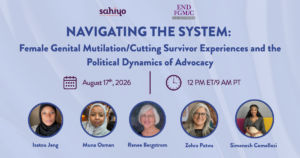
My work with Sahiyo involves supporting both the California and Hawaii Coalitions to End FGM/C by facilitating monthly meetings and completing action items such as drafting coalition materials. I’ve drafted an internal FAQs document and a Talking Points document for coalition members to reference. I also began a California legislator outreach project and have met with 12 legislators to discuss FGM/C in California and why the law needs to be updated. Additionally, I supported the organization of a recent activist retreat by assisting with creating an agenda, communicating with participants, and creating a slide deck for the convening. Post-convening, I organized a survey for feedback and drafted an internal report based on feedback and notes from the convening to further discussions surrounding continued collaboration that began at the retreat. I have also drafted blog posts about the need for updated FGM/C legislation in California and how harmful conflations between gender-affirming care and FGM/C are impacting legislative efforts. Currently, I am assisting with a collaborative webinar we are hosting with API-GBV by working on the agenda and slide deck.
How has your involvement with Sahiyo impacted your life?
My involvement with Sahiyo has deeply impacted my understanding of meaningful advocacy. It has taught me that advocacy requires not only centering the voices of those impacted, but also thorough research and relationship-building. Supporting Sahiyo’s coalitions and working on collaborative projects with other organizations has really shown me the importance of collaboration. Moreover, my experience as a Policy Intern and learning more about state-level gaps surrounding FGM/C, particularly in California, has strengthened my interest in legal advocacy and health equity.
What words of wisdom would you like to share with others who may be interested in supporting Sahiyo and the movement against FGC?
I would encourage others interested in supporting Sahiyo and the movement against FGC to begin by learning more about FGC. I would recommend that they take time to go through Sahiyo’s website and resources on FGC, such as FAQs or past webinars. Moreover, I would encourage them to sign up for Sahiyo’s newsletter and engage with opportunities that are sent via email. One of the most impactful ways to support the movement against FGC is to attend discussions, webinars, or other public engagement opportunities to support advocacy efforts, uplift survivors, and to continue to learn more about FGC.