Sahiyo, in collaboration with The U.S. End FGM/C Network, Equality Now, and movement partners, has officially released the new Bodily Autonomy Resource, an educational explainer that explores the importance of bodily autonomy as a fundamental human right and highlights the connections between movements working to protect bodily integrity.
Developed following insights and participant feedback from a retreat on bodily autonomy held in the Adirondacks this past May, this resource brings together perspectives from advocates working across different movements and aims to deepen understanding of bodily autonomy, informed consent, and the importance of ensuring that everyone has the right to make decisions about their health without coercion.
What is bodily autonomy?
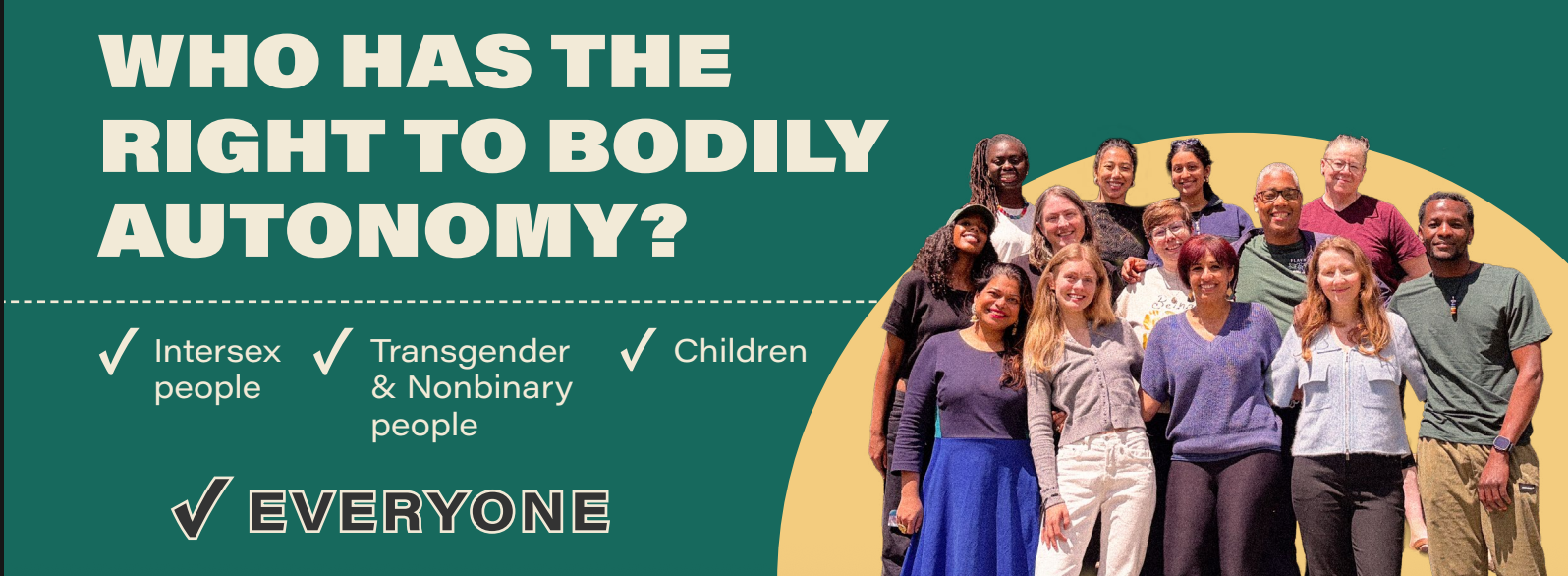
At its core, the resource offers a straightforward but powerful definition: bodily autonomy is everyone’s basic right to control their own body, health, and future.
Even though this right should apply to everyone, that is rarely the reality. People across the globe face routine violations through harmful practices, non-consensual medical procedures, and restricted access to healthcare.
This new explainer zeroes in on three key issues: female genital mutilation/cutting (FGM/C), forced intersex genital surgeries (IGM), and access to gender-affirming care.
Highlighting the connections between three movements
One of the resource’s central contributions is its exploration of how these three areas intersect through the principles of bodily integrity, informed consent, and individual agency.
FGM/C comprises procedures involving the partial or total removal of external female genitalia, or other injury to female genital organs, for non-medical reasons. Recognised internationally as a human rights violation and a severe form of gender-based violence, FGM/C takes away an individual’s control over their own body. It is most often performed on girls during childhood, removing their ability to provide informed consent.
The resource also addresses forced intersex genital surgeries, sometimes referred to as intersex genital mutilation. Intersex is an umbrella term for people born with variations in reproductive anatomy, including variations in genitals or internal organs. Forced IGM procedures are often performed on intersex infants and children before they can provide informed consent. These interventions can take away their control over their bodies and have lifelong physical and emotional consequences. The resource recognises IGM as a human rights violation.
In contrast, gender-affirming care is an approach to healthcare that supports individuals in aligning their bodies, expression and lived experiences with their gender identity. Depending on a person’s needs and goals, this care may include social, psychological, medical, or surgical support. Access to gender-affirming healthcare is rooted in informed consent and individual ownership of one’s body. Equitable access also helps prevent discrimination and violence against transgender, gender-nonconforming, and intersex communities.
By placing these three areas alongside one another, the resource illustrates an important message: while FGM/C and forced IGM violate bodily autonomy, access to gender-affirming care supports individuals in exercising it.
Why the resource is important
The release of this explainer encourages greater understanding of the shared human rights principles connecting different movements, while recognizing the distinct experiences of the communities they represent. Protecting bodily autonomy requires continued education, advocacy, and collaboration. By understanding how different forms of bodily autonomy violations and protections are interconnected, advocates and communities can build stronger movements grounded in human rights, informed consent, and bodily integrity.
Sahiyo and its partners invite advocates, organizations, community members, and allies to explore and share this new resource as a starting point for further learning and conversation.
Read the Bodily Autonomy Resource here and join the collective effort to protect everyone’s right to bodily autonomy.