In December 2025, Sahiyo will celebrate its 10th anniversary, and we’re hosting a campaign to mark the occasion! Starting in July and running through December, we will highlight each of our programs, reflecting on our accomplishments, and planning for the future.
This month, we are highlighting Sahiyo’s Community Education & Training and Technical Assistance program. The Community Education & Training and Technical Assistance Program seeks to provide culturally sensitive outreach education and methods, and survivor-centered trainings on care and support.
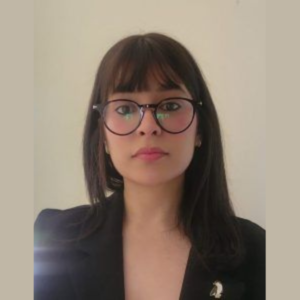
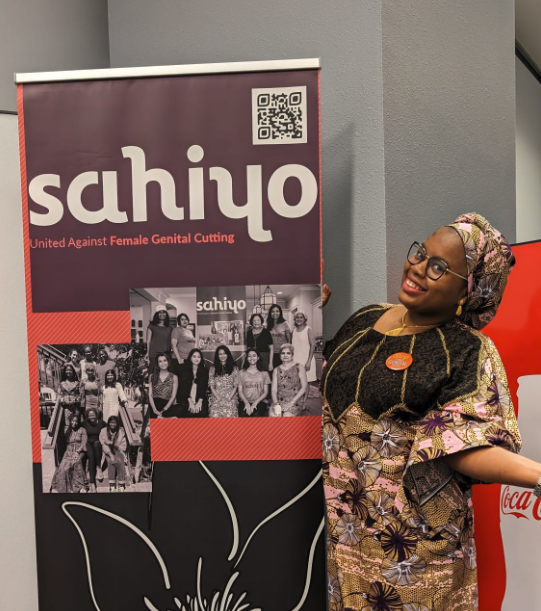
Below Jumai K Olumo-Saidu, PhD, a Sahiyo volunteer and researcher, reflects on her involvement with the program.
- How did you learn about Sahiyo and what drew you to our mission?
Before I moved to the United States, I knew I wanted to get a PhD with a research focus on addressing female genital mutilation/cutting (FGM/C). Although my initial target community was in Nigeria, when I moved here to the United States, I discovered that FGM/C wasn’t just a Nigerian or an African issue as I had previously thought; it was a global issue, and as a result, I began to look out for organizations that were interested in this topic also. I wanted to find an organization with similar goals to my research and also use it as an avenue to not only learn, but to share the little knowledge of the harmful practice I had at the time.
- Why did you want to be involved with Sahiyo’s Community Education & Outreach or FGC Training and Technical Assistance efforts (i.e., career, from an FGC-impacted community, health care provider, etc.)?
I chose to get involved with Sahiyo’s Community Education & Outreach and FGC Training efforts because I come from a FGM/C impacted community and have spent the last year deeply engaged in research exploring the lived experiences of African migrant families affected by FGM/C in Chicago. As a Nigerian-born advocate, I’ve witnessed both the silence and the strength that surrounds this issue. My work is grounded in amplifying survivor voices, promoting culturally responsive education, and supporting healing, and I hope to continue to walk this path. I intend to have an NGO to support survivors and push for prevention within migrant communities, and also provide culturally competent intervention methods. Volunteering with Sahiyo aligns perfectly with my mission to create informed, compassionate, and community-driven change.
- In what ways have you been involved in supporting Community Education & Outreach or FGC Training and Technical Assistance efforts organized by Sahiyo?
I have been involved in many ways in supporting community education and outreach organized by Sahiyo. To start with, as a volunteer, I help to train healthcare professionals on the concept of FGC and how to navigate their survivor clients. I have also attended several webinars and training to better understand what all that process entails to provide adequate support and intervention. I have helped review documents detailing FGM/C and also made extra efforts to give my own input.
- Can you share a memorable moment or experience from your time volunteering with Sahiyo?
One of my memorable experiences was when I volunteered to train professionals at the ICASA conference. During the session, a woman who appeared to be of Arab descent challenged me on the information we were presenting. She said, “As a Muslim, this is part of our culture, and it has served us for years.” It wasn’t a pleasant moment, but it really hit home for me. It made me realize the challenges we face when healthcare professionals or therapists still see FGM/C as a cultural practice that “serves” communities. How can effective intervention happen when those in care roles hold these beliefs? It took me back to my research, where I see a real need for culturally competent healthcare that genuinely addresses the needs of FGM/C survivors, offering them adequate care and support.
- What did you learn or gain personally and/or professionally through your involvement with Sahiyo? If yes, how could you elaborate on how so?
Being involved with Sahiyo has taught me a lot both personally and academically. I’ve gained a deeper understanding of the cultural complexities surrounding FGM/C, which has been invaluable for my research. It’s also strengthened my ability to approach sensitive topics with empathy and cultural awareness. This experience has helped me refine my research approach and shaped how I think about engaging with communities on these issues.
- How does the work that Sahiyo has done in community education and FGC training strengthen the movement to end the harmful practice?
Sahiyo’s work in community education and FGM/C training is so important because it gives people the knowledge and language to talk about something that’s often hidden in silence and shame. What I really appreciate is how the work doesn’t just focus on stopping the practice; it focuses on building trust, raising awareness, and helping communities understand why change is needed. The training helps professionals support survivors with empathy, and the community education helps people feel seen and heard, not judged. This kind of approach makes the movement stronger because it brings everyone along, instead of creating more fear or stigma.
- What are your hopes for the Community Education & TTA Program for the next 10 years?
Over the next 10 years, I hope the Community Education & TTA Program becomes a national model for culturally grounded, survivor-centered advocacy. I’d love to see expanded outreach into underserved migrant communities, stronger collaborations with schools, healthcare systems, and faith-based organizations, and more survivors trained as peer educators. Ultimately, I hope the program helps shift community norms, influence policy, and empower the next generation to speak out, support one another, and break cycles of silence around FGM/C.
- Why do you feel that community education and FGM/C technical training, are important to the movement to end FGC?
Community education and FGM/C technical training are critical because they shift the conversation from silence and stigma to awareness and empowerment. Education helps dismantle myths, challenge harmful norms, and build trust, especially when it’s led by people from affected communities. Technical training equips service providers, educators, and advocates with the tools to offer trauma-informed, culturally sensitive support. Together, they ensure that prevention efforts are not only informed but also compassionate and community-centered, key to creating lasting change.