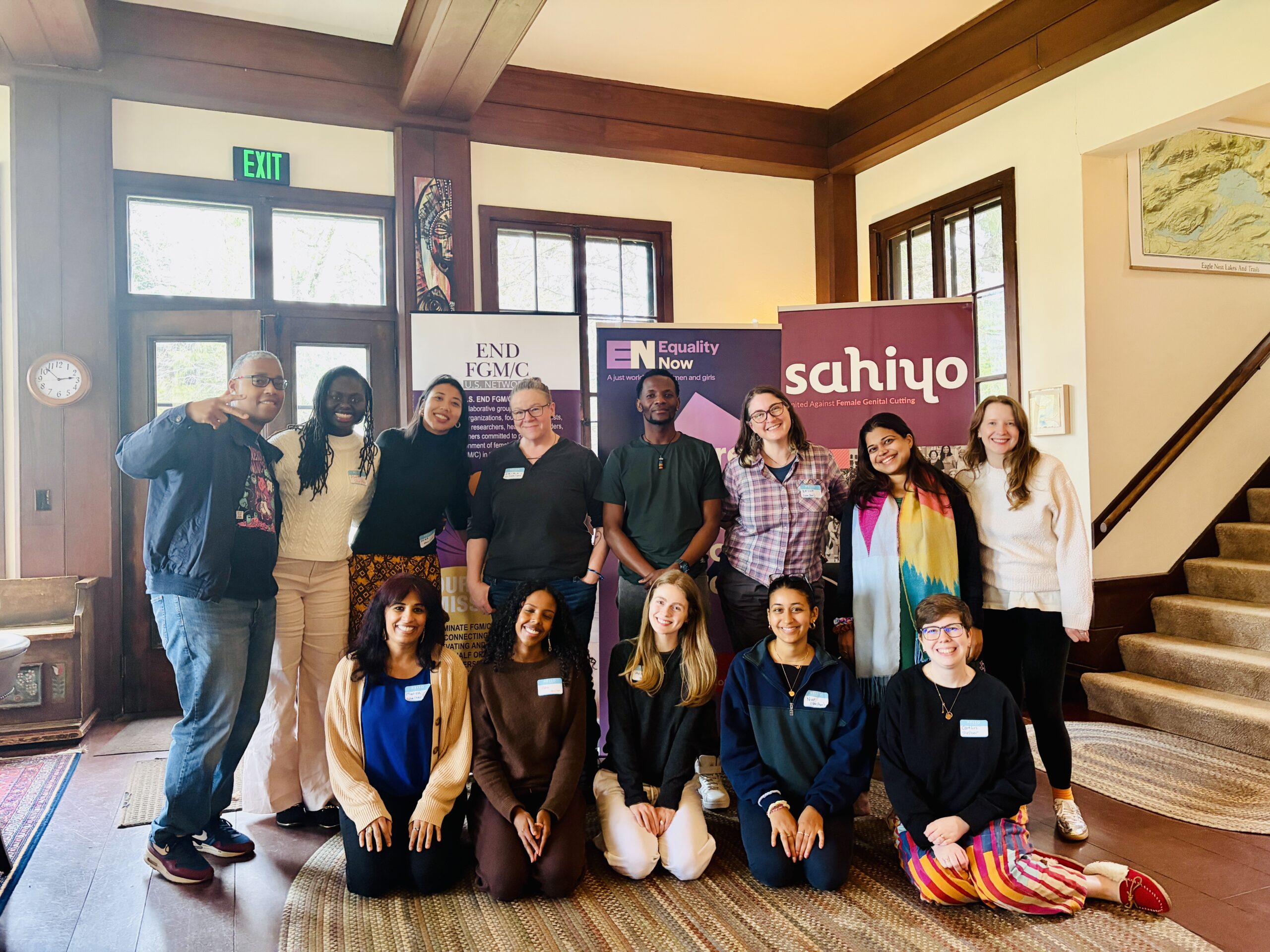
Deep in the Adirondacks, a powerhouse group of 14 survivors, advocates, policy experts, and LGBTQIA+ allies gathered with a singular, urgent purpose: to build cross-movement solidarity. From May 13th to 17th, we confronted the dangerous and escalating conflation of female genital mutilation/cutting (FGM/C) with gender-affirming care (GAC) in public discourse and legislation—a trend that threatens the progress of both movements.
Sahiyo, Equality Now, and The US Network to End FGM/C hosted the event and sought to build a convening that was survivor-centered, trauma-informed, and prioritized accessibility, care, and diversity across geography, identity, and lived experience. Over the course of 5 days, the gathering clarified distinctions between FGM/C and GAC, strengthened shared language, and developed coordinated strategies rooted in bodily autonomy, human rights, and survivor- and youth-centered approaches.
Why This Convening Was Needed Now
In recent years, legislation and public rhetoric have increasingly misrepresented FGM/C by linking it to gender-affirming healthcare for youth. This false equivalence is actively causing harm:
- It dilutes survivor-centered efforts to address FGM/C as a form of gender-based violence.
- It fuels stigma and misinformation about evidence-based gender-affirming care.
- It risks embedding harmful narratives into federal and state policy.
- It undermines decades of human rights and public health progress.
The retreat was a first-of-its-kind opportunity to create intentional space for cross-movement dialogue, trust-building, and strategic alignment during a high-stakes policy moment in the United States.
The convening forged a unified messaging framework and strategic roadmap to protect bodily autonomy for all, ensuring the rights of FGM/C survivors and gender-diverse individuals are championed together, and not pitted against one another.
This retreat was a beginning, a catalyst for laying the groundwork for cross-sectoral alliances ready to mobilize advocacy, drive programmatic change, and accelerate the global movement for gender equity.