By: Aarefa Johari
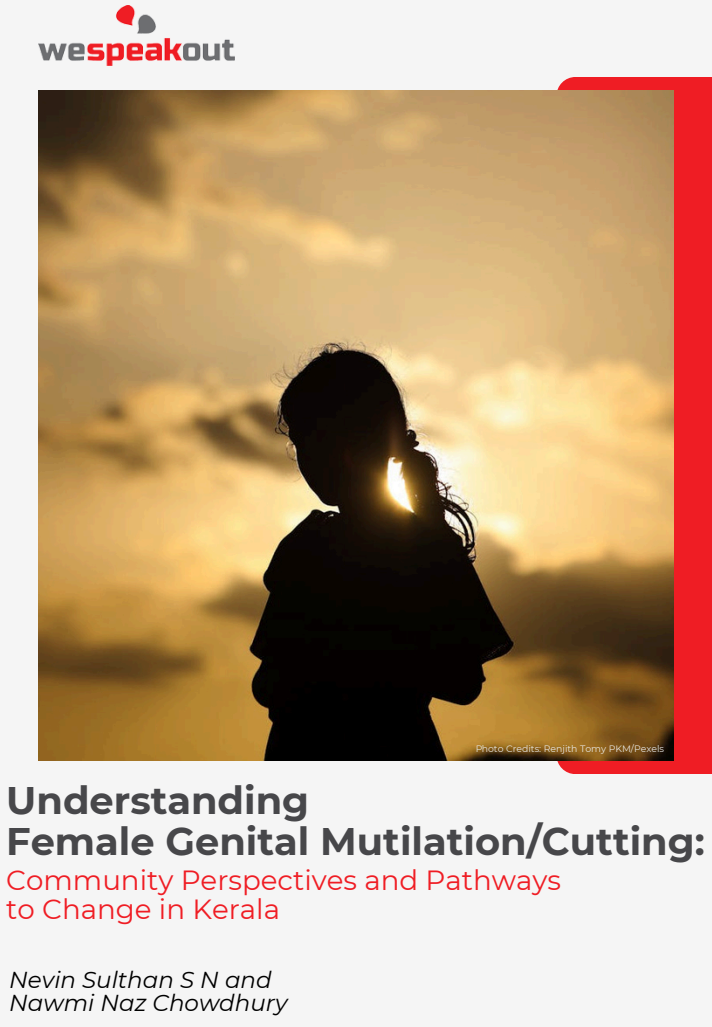
A new exploratory study on female genital mutilation/cutting (FGM/C) in Kerala – the first of its kind conducted in the south Indian state – confirms the prevalence of the harmful practice in the region’s Sunni Muslim communities through the testimonies of nine women. Released by WeSpeakOut and Equality Now on July 9, 2026, the study highlights the impact of FGM/C and the intense social pressure faced by those who challenge it.
The study was conducted by researcher Nevin Sulthan, who is a survivor of FGM/C from Kerala, in the Nedumangad area of Thiruvananthapuram district. The nine women interviewed in the study included survivors of ‘pen sunnath’ (female circumcision), as well as two mothers whose daughters were cut without their knowledge or consent. Unlike India’s Bohra community, which typically subjects girls to genital cutting at the age of seven, FGM/C-practicing communities in Kerala carry out ‘pen sunnath’ on infant girls, often at the time of the traditional head-shaving ceremony which takes place 40 days after birth.
In this respect, FGM/C in Kerala is closely linked to the way it is carried out by Sunni Muslims in Sri Lanka. In both regions, it is barbers from the ‘osathi’ caste who carry out the cut on infant girls. Because of this, most women discover that they were cut only when they reach adulthood or become mothers themselves.
The testimonies in the study highlight the lack of agency and financial independence among the women, minimal decision-making powers, and the taboos around women’s sexuality, which make it difficult for them to talk about FGM/C or raise objections to it. Some of the women also indicated that FGM/C had adverse long-term effects on sexual desire and intimacy in marriage.
The prevalence of FGM/C in Kerala was first discovered through a Sahiyo investigation of a clinic in Kozhikode in 2017, which prompted further reportage in the local media and swift condemnation from the state’s health minister. Sahiyo co-founder Aarefa Johari spoke about the impact of that investigation at a closed-door panel discussion in Thiruvananthapuram on July 8, 2026. At the event, organised by WeSpeakOut, women’s rights activists from Kerala called for the urgent need to outlaw FGM/C in India and to raise awareness about the health consequences of FGM/C within practicing communities.