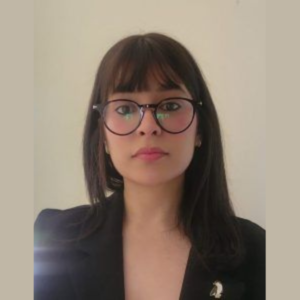
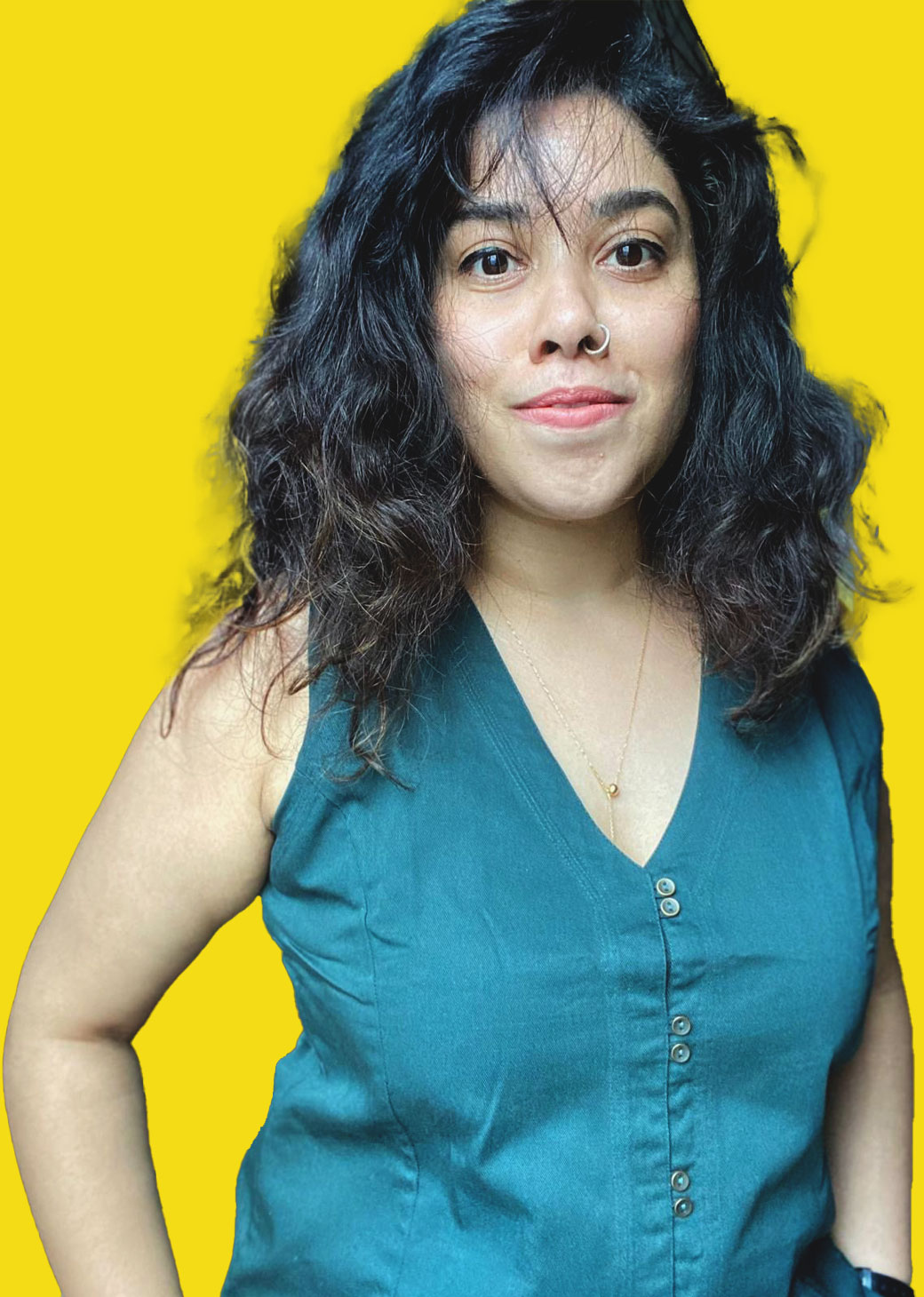
About the Founder: Priya Goswami (she/her) is a Mozilla fellow, co-founder, and CEO of the feminist tech and social entrepreneurship app Mumkin App. In 2015, she co-founded Sahiyo, with four women, an international non-profit in the US and India today. She is a filmmaker by training, a recipient of the German Chancellor Fellowship, and a 60th National Film Award of India awardee for her documentary ‘A Pinch of Skin’.
- How did you all come together as five co-founders and start Sahiyo?
The organization began organically as a dialogue between five women from different parts of the world. I made a documentary in 2012-13 called “A Pinch of Skin”, which featured testimonies from anonymous survivors of FGC. The film won a National Film Award, awarded by the President of India, and garnered significant media attention, indicating that I must move my advocacy in a direction that would allow survivors to lead the movement directly. I wanted to connect with more people who were speaking openly about FGC, and I found an article by Mariya that stood out to me. We began talking about our ideas for the movement to end FGC. Eventually, I introduced her to the others, who would then go on to become Sahiyo co-founders Aarefa, Shaheeda and Insia. We began to have a conversation about what we could do to help stop this harmful practice. We concluded that we needed to create a space for dialogue, where survivors could speak about their experiences undeterred and safely, and that’s how we started, united by a common goal.
- What were your initial goals or hopes for the organization and how has the organization’s vision evolved since its founding?
We, each founder, come from a different discipline; however, enabling dialogue on FGC struck a chord with each one of us, coming together as Sahiyo’s motto— ‘empowering people through dialogue, education and storytelling’. We started with an initial focus on shedding stigma on FGC through enabling dialogue. Over time, our ways to reach out has evolved. In the past 10 years, FGC has become more visible. As a result, our work has expanded into connecting FGC to gender-based violence and focusing more on survivor well-being advocacy, holistically.
- What moments over the past 10 years are you most proud of?
I’m proud of the journey we’ve been on. I’m always mentioning to people that I’m one of the founders and telling them about Sahiyo. A particularly cherished memory of mine was the first and only in-person meeting of all five founders in Mumbai in 2016. It was so powerful to have us all together in one space.
A more recent moment that was impactful to me was at our most recent Thaal Pe Charcha meeting. There was an older woman attending the meeting, and for the most part, she seemed to be enjoying herself, laughing and engaging in conversation with everyone else. Then, suddenly, she broke down and let her emotions out. That moment showed me the importance of in-person events and the connections that are formed through them, especially in a world that is becoming increasingly digital.
- As you reflect on the last decade, what are some of the most valuable lessons and insights you’ve gained?
When you have five people from different multidisciplinary professional backgrounds— a social worker, filmmakers, a journalist, and a researcher- the path to reaching a consensus is bound to be messy. However, that is our superpower. We have been interdisciplinary from the very beginning, enabling us to tackle a problem using a multidisciplinary, multipronged approach. And the best lesson of all is to make room for each other’s perspectives to succeed as an organization.
- What does it mean to you that Sahiyo is celebrating its 10 year anniversary?
It makes me feel old! As the youngest founder, I feel like I’ve been growing up right alongside Sahiyo. This 10-year mark signifies the organization’s growth and continued journey. Over the past decade, the other founders and I have gained invaluable insights from one another. Our diverse set of skills and perspectives has been essential to Sahiyo’s success.
- In what ways have you seen the anti-FGC and gender based violence activism space change and evolve over the past ten years?
Things are in a constant state of flux. Recently, we’ve seen a regression in the misuse of technology to further the harms against women. However, in regard to FGC, we’ve seen a lot of progress and recognition. In the U.S., we’ve seen pieces of legislation passed banning FGC, and many of those laws are a direct result of Sahiyo’s and Mariya’s advocacy. Despite this progress, I don’t think that overall society’s understanding of gender-based violence as a fundamental problem has significantly improved.
- How does Sahiyo fill a gap in the global movement to end female genital cutting (FGC)?
Sahiyo bridges a critical gap by prioritizing survivor voices and storytelling, exemplified by one of our earliest campaigns “each one reach one“, which used personal narratives, (in the form of selfies), to connect people with survivors’ experiences. This approach of bringing out the survivors’ perspective distinguishes Sahiyo from other organizations that focus on solution-focused efforts. Storytelling is a powerful and often underestimated tool in advocacy, and Sahiyo has brought it to the forefront of the work to end FGC and support survivors.
- How would you like to see Sahiyo change and grow over the next 10 years?
Five Sahiyo branches worldwide and annual retreats to connect in person! On a more on-ground note, I’m pleased with Sahiyo’s progress and the direction we are going in. We’re still experimenting and growing as an organization, but we are moving forward. I’d like to see more work done in India, especially, and get international bodies like the UN to recognize type 1 FGC.