By: Khushi Prakash
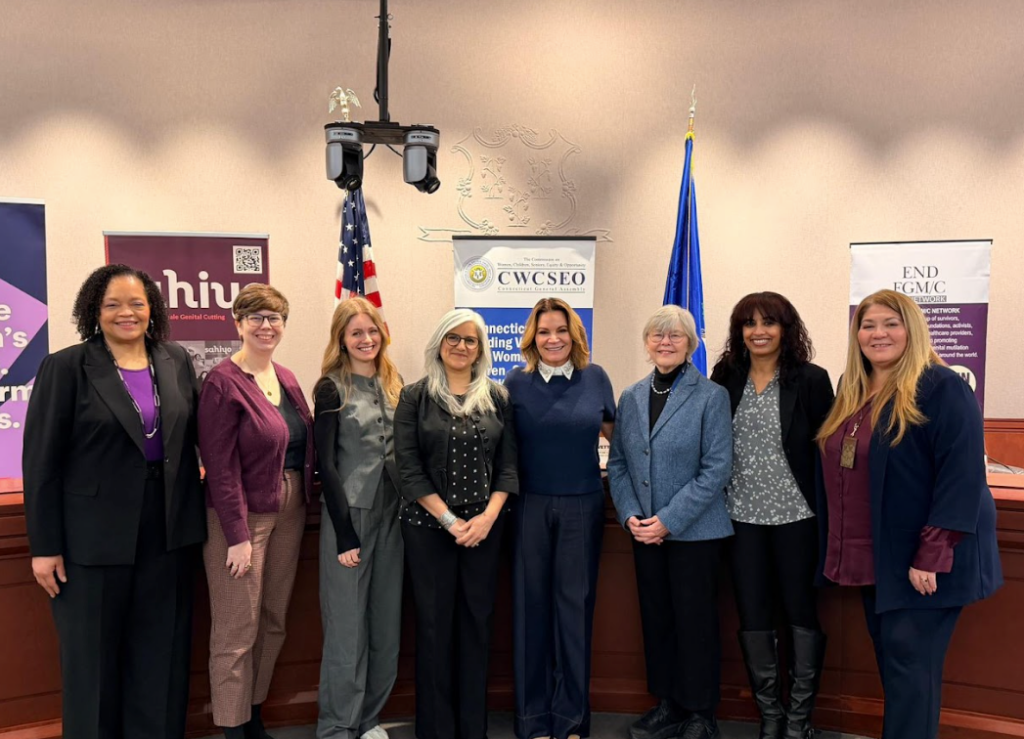
On January 29th, 2026, the Connecticut Coalition to End Female Genital Mutilation and Cutting (FGM/C) partnered with the Commission on Women, Chidlren, Seniors, Equity and Opportunity (CWCSEO) to host an informational briefing for Connecticut legislators and their staff at the Legislative Office Building in Hartford.
Survivors, advocates, and members of the CT Coalition to End FGM/C presented evidence-based data, shared lived experiences, and outlined the legal and policy gaps that leave girls in the state unprotected. The briefing underscored that FGM/C is a human rights vilation occuring within the United States and to build momentum ahead of the 2026 legislative session.
Connecticut remains one of nine states without a law protecting children from FGM/C. All surrounding New England states have legislation banning this form of gender-based violence, which makes Connecticut a possible “destination state” for cutting. Even though FGM/C has laws protecting girls on the federal level, child protection systems, mandated reporting laws, and local courts are all governed at the state level.
Definitions of what FGM/C is vary across different communities. For this reason, it is important that state law establish clear and consistent legal definitions
Centering Survivor Voices
The briefing offered insight from a panel of survivors and advocates, one of those being Connecticut resident and survivor Zehra Patwa, an activist, co-founder of We Speak Out, and Sahiyo governing board chair.
Zehra shared that she learned she had undergone FGM/C as a child at 43-years-old. Even with no recollection of the event, the psychological impact has been lasting. Her story, similar to many other survivors, highlights that many girls who undergo cutting at a young age do not fully understand what is happening at that time. Years later, psychological trauma and a sense of violating bodily autonomy is one of the few lasting impacts. Many survivors describe FGM/C as a lifelong issue, affecting psychial and mental health, childbirth, and overall well-being
FGM/C as a Public Health and Human Rights Issue
FGM/C is widely recognized as a form of gender-based violence and a violation of fundamental human rights. Anastasia Law, lawyer and Program Officer at Equality Now, outlined the international legal framework that defines FGM/C as a violation of:
- The right to bodily integrity and autonomy
- The right to the highest attainable standard of health
- The right to dignity, equality, and non-discrimination
- Freedom from violence
The United Nations Human Rights Council has reviewed current legislation in the United States and urged the federal government to allow states to enforce their own FGM/C laws. Under international law principles of due diligence, lawmakers have an obligation to prevent harm, protect individuals within their jurisdiction, and provide access to remedies and support.
FGM/C disproportionately targets girls and women and is often justified under narratives of purity, sexuality, and marriageability, reinforcing control over girls’ bodies. As those in the briefing stressed, FGM/C is not a distant issue that only occurs in other countries. There are many girls and women in the United States, including in Connecticut, that are currently at risk.
Gaps in Healthcare and Education
Survivors also highlighted current gaps with healthcare professionals and the system. In a digital storytelling video created by one survivor, she describes going in for a routine gynecological service with a medical professional who was unfamiliar with FGM/C. She was asked insensitive questions and experienced feelings of shame, discouraging this survivor’s likelihood of seeking medical attention when needed in the future.Education for healthcare providers, culturally sensitive training, community engagement, and survivor support services are required components of a holistic response. Caitlin LeMay, Executive Director of The U.S. End FGM/C Network, explained that education is a critical component in understanding this issue. FGM/C happens in the United States and should be recognized as a local issue. Increased education among educators, healthcare workers, and mandated reporters can help identify risks earlier and ensure girls receive protection.
A Call to Action:
Since the January 29th briefing, Raised Bill No. 259 has been introduced in the Judiciary Committee to establish the crime of female genital mutilation/cutting and strengthen legal protections for survivors.
If you are a Connecticut resident, contact your legislature and urge them to support these protections.