By Mariya Taher
In 2025, Hawaii proudly ranked as the best state in the nation for women’s equality, a testament to the deeply held Hawaiian values of respect and care for wahine. Yet, beneath this veneer of progress, a silent violence persists: female genital mutilation/cutting (FGM/C), a form of gender-based violence outlawed in most of the United States but not explicitly prohibited in Hawaii.
This leaves survivors like Zulfa, a kamaʻāina from Hawaii, without vital support to heal from their trauma, a stark contradiction to the spirit of aloha that calls for compassion and protection for all — especially our keiki.
“I currently live in Hawaii, and was subjected to female genital mutilation/cutting or FGM/C as a young child in my country of birth in Asia,” Zulfa wrote in a Change.org petition.“The cut was carried out without anesthesia or pain medication. Coming from a community that practices FGM/C, I have numerous relatives and friends who were subjected to FGM/C without their consent or approval. I am still dealing with the long-term psychosocial effects of it.”
Zulfa urged legislators to make FGM/C illegal in Hawaii—yet, she did so with anonymity. Speaking out against FGM/C is seen as badmouthing the community, leading to alienation from those you love. Her anonymity is a testament to the pervasive fear and silence surrounding FGM/C, and the urgent need to confront it, not as a distant global issue, but as a challenge to the very heart of Hawaiian values.
Her story is one I am familiar with, being a survivor of FGM/C myself, and having started a nonprofit to support survivors of FGM/C living in the U.S. This work brought me to Honolulu in September 2024. During that visit, I learned how unacknowledged FGM/C is, even among legislators and nonprofits working to end gender-based violence.
FGM/C is the removal of part or all of the external female genitalia for non-medical reasons, considered an extreme form of gender-based violence, causing lifelong physical, psychological, and emotional trauma, including difficulties during childbirth, and, in some cases, death.
Over half a million women and girls are impacted by FGM/C, and although FGM/C is illegal in the U.S. federally by the 2021 “Strengthening the Opposition to FGM (STOP) Act,” loopholes exist at the state level. Hawaii is one of nine remaining states without any legal protection against FGM/C. Though data is limited, in part due to a lack of reporting mechanisms, one study indicates there are 304 individuals living with FGM/C and 1,041 children at risk of undergoing FGM/C in Hawaii. These numbers are not abstract; they represent individuals like Zulfa, who continue to deal with the long-term psychosocial effects and the devastating lack of targeted resources in Hawaii.
State laws remain critical tools in preventing and prohibiting FGM/C, and attempts to pass such legislation in Hawaii have occurred. In 2019, House Bill 132 and Senate Bill 1434 sought to criminalize FGC by establishing it as a Class B felony offense to perform, facilitate, or allow the procedure on minors. In 2023, Senate Bill 131 was introduced as well.
This bill not only defined FGM/C comprehensively but also made it a Class B felony to perform, allow, authorize, or direct another to perform FGM/C on a minor. SB 131 made it clear that individuals under the age of 18 could not consent to FGM/C and that “cultural, religious, or traditional customs, as well as consent from the individual or their guardian, would not be considered valid defenses” for performing FGM/C. The bill also included affirmative defense provisions, such as medical exemptions, along with mandatory reporting requirements.
However, every bill that has been introduced has eventually died. Each failure has been a missed opportunity for Hawaii to fully embody its status as the best state for women’s equality.
In January 2026, during the new legislative session Senate Bill 2725 and House Bill 2448 were introduced. If passed, these bills would prohibit FGM/C of minors as a Class B felony and provide civil remedies for survivors. Both measures prohibit “vacation cutting,” define FGM/C as child abuse, and include exceptions for necessary medical procedures, while explicitly stating that cultural or religious traditions are not valid defenses.
These bills offer Hawaii an opportunity to demonstrate that its progressive reputation is matched by robust legal protections for even the most vulnerable, validating that FGM/C is a form of violence and that survivors in Hawaii deserve support. It is an opportunity to set a national example.
“It’s a form of telling the survivors of FGM/C that, ‘We hear you, and we understand that you’ve been through this and it was a terrible experience,” said Zulfa.“Passing this law helps to acknowledge the trauma of the experience and protect future generations.”
Zulfa also recognizes the need for legislation mandating education about FGM/C’s harms and curriculum development to train Hawaii-based health care providers on working with survivors. A common critique from FGM/C survivors living in the United States is that they often must educate their own doctors about the health consequences they suffer from due to undergoing FGM/C.
The time for silence is over. For Hawaii to authentically uphold its reputation as the best state for women’s equality, it must take decisive action. Passing this legislation is a critical step towards living up to that promise, affirming a commitment to gender equality, and ensuring its progressive values are reflected in laws that protect every future wahine and keiki from the harms of FGM/C.
About The Author:
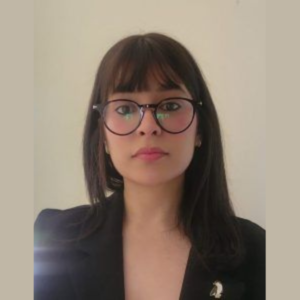
Mariya is an award-winning social activist with fifteen years in the gender-based violence field. In 2015, she cofounded Sahiyo, an organization with the mission to empower Asian and other communities to end female genital cutting/mutilation (FGM/C). As an FGM/C survivor with South Asian roots, she empowers communities and survivors through dialogue, education, and collaboration to create social change. Mariya Taher was a Public Voices fellow on Advancing the Rights of Women and Girls, a partnership between Equality Now and The OpEd Project. Contact her at mariya@sahiyo.org.