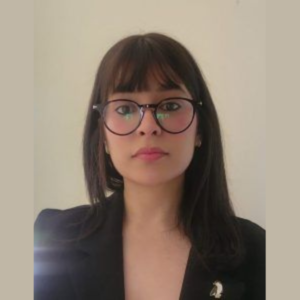
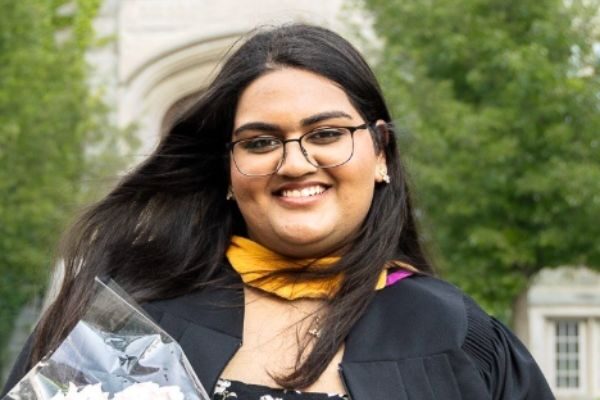
Every month, Sahiyo likes to highlight the incredible work of our staff members, fellows, and interns. Today, we’re spotlighting Sahiyo’s current Policy Intern, Khushi Prakash. Khushi holds a Bachelor’s degree in Epidemiology/Biostatistics and Biology from the University of Western Ontario. She is now pursuing a Master of Public Health degree specializing in Health Policy & Law and Program Management from Boston University School of Public Health. She has worked in the non-profit sector, focusing on donor outreach and fundraising campaigns. Eager to translate this experience into effective advocacy, Khushi is now pursuing opportunities in policy development and research to advance health equity and protect the rights of vulnerable populations.
What was your experience of learning about female genital cutting (FGC) for the first time like?
Before joining Sahiyo, I had mostly heard about FGM/C in passing, usually during conversations about gender-based violence and harmful practices in South Asian communities. I didn’t really understand how severe it was or what the long-lasting physical and emotional effects were until I started working at Sahiyo. Listening to survivor stories through recordings of past legislative hearings and community events was especially emotional for me, and added a clarity on why we are doing this important work.
When and how did you first get involved with Sahiyo?
I first learned about Sahiyo while browsing remote internships in Massachusetts. As I was preparing to move away from my hometown in Canada, I was hoping to lay some roots as I started fresh. I had previously worked in the nonprofit sector and taken part in several school projects focused on women’s rights and reproductive health, so I was especially interested in opportunities that brought those interests together. Since I was also beginning graduate school in health policy and law and had little familiarity with the U.S. legal system, I was looking for something that would help me gain a better understanding of how advocacy and policy function in the states.
What does your work with Sahiyo involve?
In my role as a policy intern, my work focuses primarily on supporting legislative and advocacy efforts to strengthen protections against FGM/C. I work with the Connecticut and Pennsylvania coalitions to end FGM/C, contribute to policy research and writing, and support the development of blogs and internal memos that track relevant legislation addressing FGM/C. My role also involves outreach to senators and legislative staff to help advance our advocacy priorities.
How has your involvement with Sahiyo impacted your life?
My involvement with Sahiyo has really shaped me both personally and professionally. Being part of this work has deepened my understanding of survivor-centered advocacy and strengthened my commitment to advancing gender justice through policy and community engagement. It has also influenced how I approach my studies in health policy and law, giving me a clearer sense of how legislation, coalition-building, and storytelling all come together to create change. More than anything, it’s shown me how powerful advocacy can be in driving meaningful progress, and how talking openly about taboo topics like FGM/C can support healing, strengthen advocacy, and move change forward. On a personal level, working alongside such thoughtful and dedicated colleagues has been incredibly motivating and grounding.
What words of wisdom would you like to share with others who may be interested in supporting Sahiyo and the movement against FGC?
I would say start by staying curious and open to learning. Take the time to listen to survivors, understand the issue more deeply, and engage with the resources and conversations already happening in the community. Advocacy doesn’t always have to be big or public-facing; sometimes, it’s about having thoughtful conversations, challenging stigma, and supporting the work in ways that feel meaningful to you. Most importantly, approach this work with empathy and respect, and remember that even small efforts can contribute to long-lasting change.