At the Women Deliver 2026 (#WD2026) conference this April in Melbourne (Naarm), Australia, Sahiyo stood at the forefront of the global movement to end female genital mutilation/cutting (FGM/C). By centering survivor voices and intersectional advocacy, the organization proved once again that survivors are not an addition to the movement—they are the movement.
Here are the highlights of Sahiyo’s participation at WD 2026:
Women Deliver PreConference: Sunday, April 26, 2026
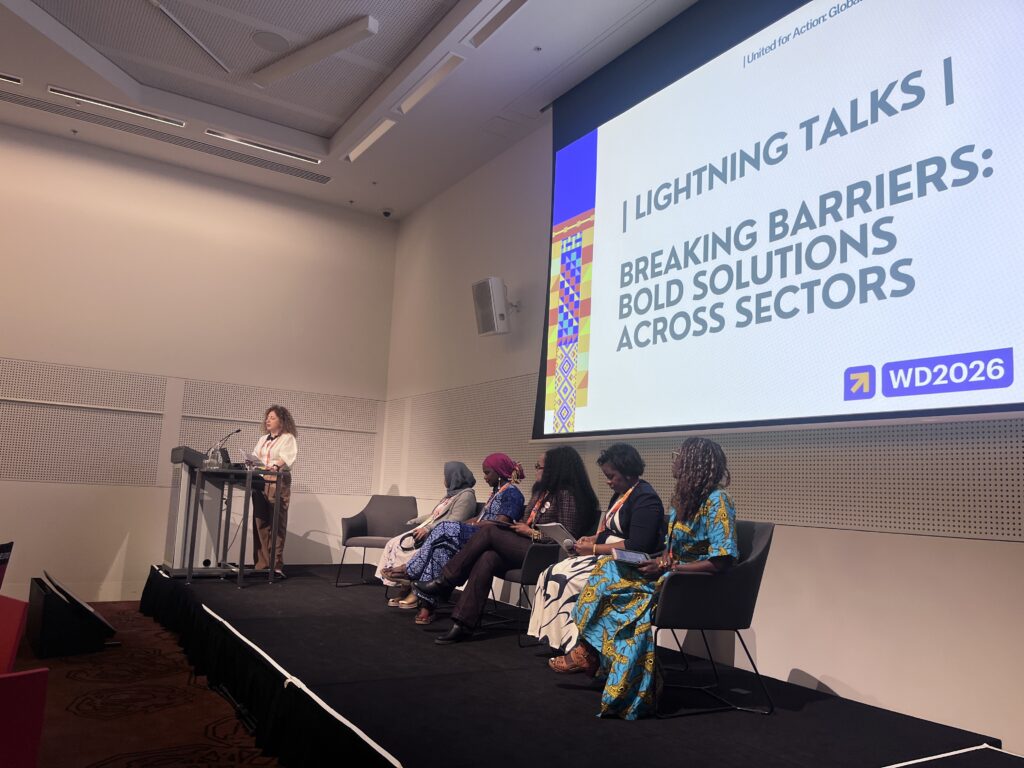
‘United for Action: Global Solidarity to End FGM/C,’ was co-hosted by: the Global Platform for Action to End FGM/C, African Women Rights Advocates, ARROW, Asia Network to end FGM/C, COVAW, End FGC Singapore, End FGM Canada Network, End FGM/C Africa Network, End FGM European Network, Equality Now, Orchid Project, Sahiyo, The Girl Generation, US End FGM/C Network, and Women Deliver.
Building on the success of previous pre-conferences at Women Deliver 2019 and 2023, the Global Platform for Action to End FGM/C organized the 2026 pre-conference to ensure that ending FGM/C remains a paramount priority within global gender equality discourse. The event hosted over 100 participants and sought to foster ongoing collaboration and share learnings, mobilize political will, strengthen cross-sectoral partnerships, and to co-create joint strategies.
Throughout the Pre-conference, Sahiyo joined fellow global advocates to champion the perspective that survivor leadership is a matter of justice rather than charity. The Global Platform highlighted the transformative power of allowing survivors to speak safely and without judgment, ensuring the global movement to end FGM/C is honest and grounded in lived experience.
The pre-conference concluded that ending FGM/C by 2030 (the U.N.’s target date for the Sustainable Development Goals) is at risk without immediate, systemic change to address the persistent lack of political will and funding. To close this accountability gap, this Pre-conference sought to secure five key resource-building commitments, including the official launch of the Kenya Convening & Festival, anchored by an initial USD 10 million investment, alongside a commitment to building a post-2030 accountability framework for multi-lateral agencies, civil society, and more.
Women Deliver Side Event: Wednesday, April 29, 2026
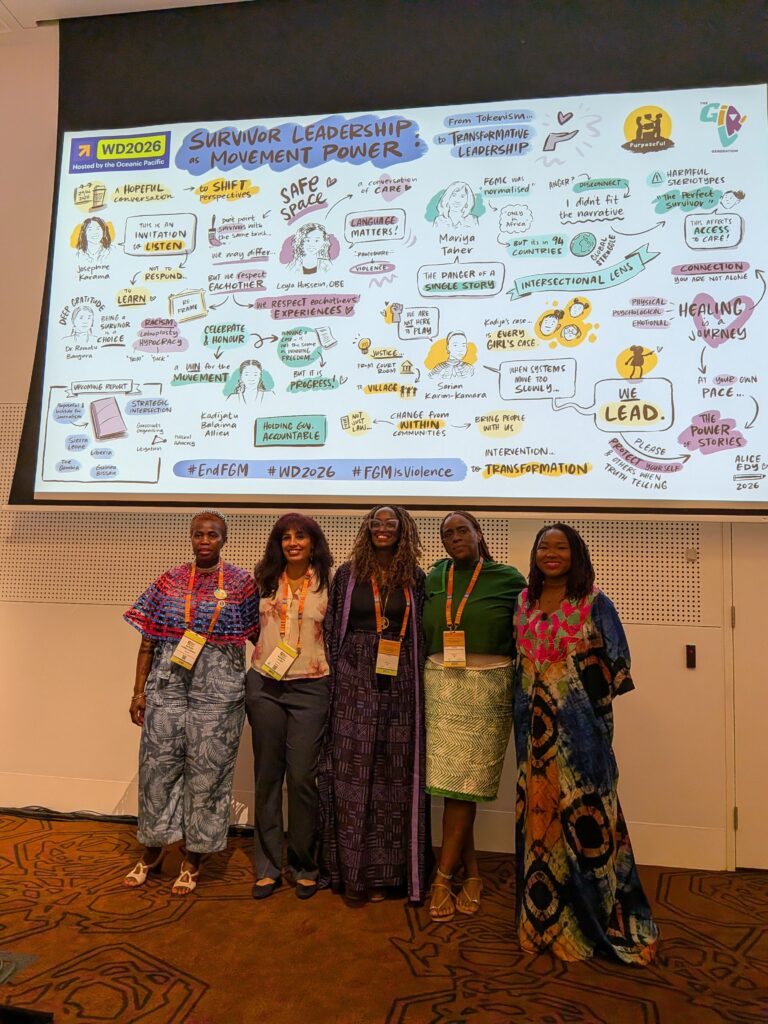
‘Survivor Leadership as Movement Power’ was co-hosted by The Girl Generation & We Are Purposeful.
A space to hear directly from those shaping the movement. This Feminist Listening Session was inspired by TED-style talks, where feminist leaders and survivors of female genital mutilation/cutting and gender-based violence shared reflections, lived experiences, and insights regarding being part of the movement to build gender equity. This side event was about creating space to pause, listen, and learn from those whose courage and organizing continue to shape this movement across all levels. Speakers included: Mariya Taher, Co-Founder and Executive Director of Sahiyo, and Sarian Kamara, an activist for women’s rights with a focus on Female Genital Mutilation (FGM).
Mariya Taher’s TED Talk highlighted that the global movement to end female genital mutilation/cutting (FGM/C) must move beyond the narrow and racist narrative of the “perfect survivor”—who is typically perceived as African, poor, and uneducated—to recognize FGM/C as a global form of gender-based violence that impacts women across all regions and socioeconomic backgrounds. To truly end FGM/C, she urged the movement to adopt an intersectional, anti-racism framework, increase funding, and ensure substantive survivor leadership by acknowledging the multitude of stories surrounding FGM/C.
Read more about this event here!
Women Deliver Concurrent Session: Wednesday, April 29, 2026
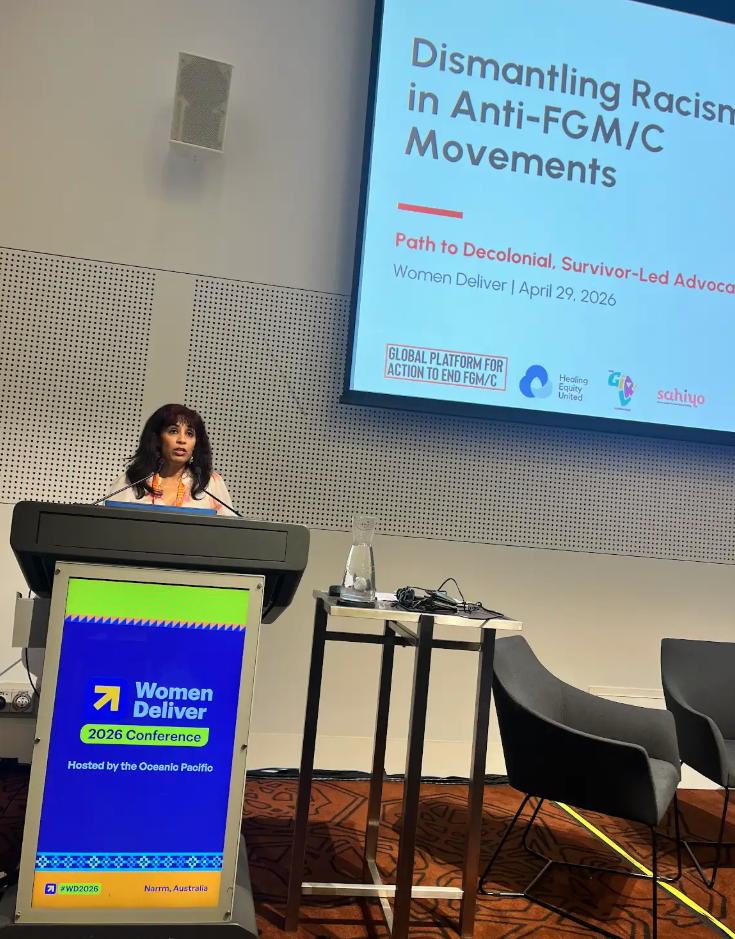
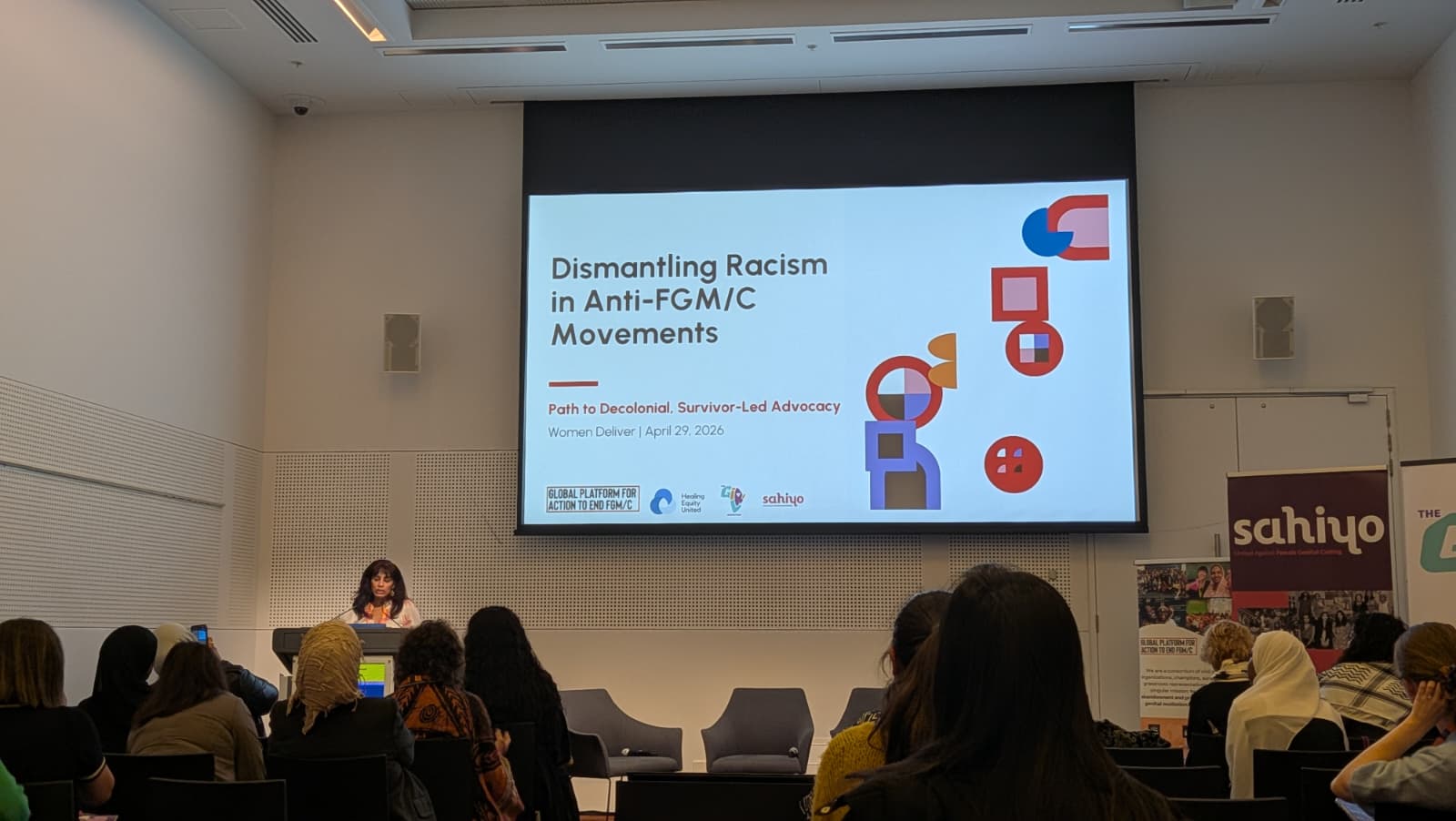
‘Dismantling Racism in Anti-FGM/C Movements: Path to Decolonial, Survivor-Led Advocacy,’ co-hosted by Sahiyo, Global Platform for Action to End FGM/C, and The Girl Generation.
Sahiyo co-hosted a crucial, highly attended concurrent session at Women Deliver that discussed why dismantling racism in the global movement to end female genital mutilation/cutting (FGM/C) is vital for equity and solidarity. Featuring a survivor-advocate panel, the discussion challenged harmful narratives and laid the groundwork for decolonial, survivor-led advocacy. This concurrent session was set against the backdrop of launching a new position paper, Dismantling Racism in Anti-FGM/C Movements: Path to Decolonial, Survivor-Led Advocacy, published by Sahiyo, in partnership with The Girl Generation and Healing Equity United.
The session began with a presentation of key insights from Sahiyo’s Critical Intersections Research Project and a December 2024 global convening of survivor-activists, both of which informed the position paper and highlighted the impact of harmful language and framing that perpetuates stereotypes and disproportionately affects the global understanding and response to FGM/C.
The intersection of racism with FGM/C has weakened solidarity, perpetuated stigma, and hindered progress toward gender equality, and this concurrent session examined how racialized framings, such as “severity hierarchies” or associations with specific communities, harm survivors and reinforce colonial racism.
Next, a panel of survivors and advocates from across Africa and Asia shared personal and professional reflections on how racial bias manifests in their work and communities. Following the panel, audience members had the opportunity to engage in small-group discussions guided by prompts that focused on naming racial hierarchies, challenging different severity framings, and brainstorming survivor-centered and anti-racist approaches for healing and collective action.
Overall, the event was designed not only to educate but also to spark honest dialogue, foster solidarity across communities, and contribute to a global reshaping of the anti-FGM/C movement rooted in justice and anti-colonialism.