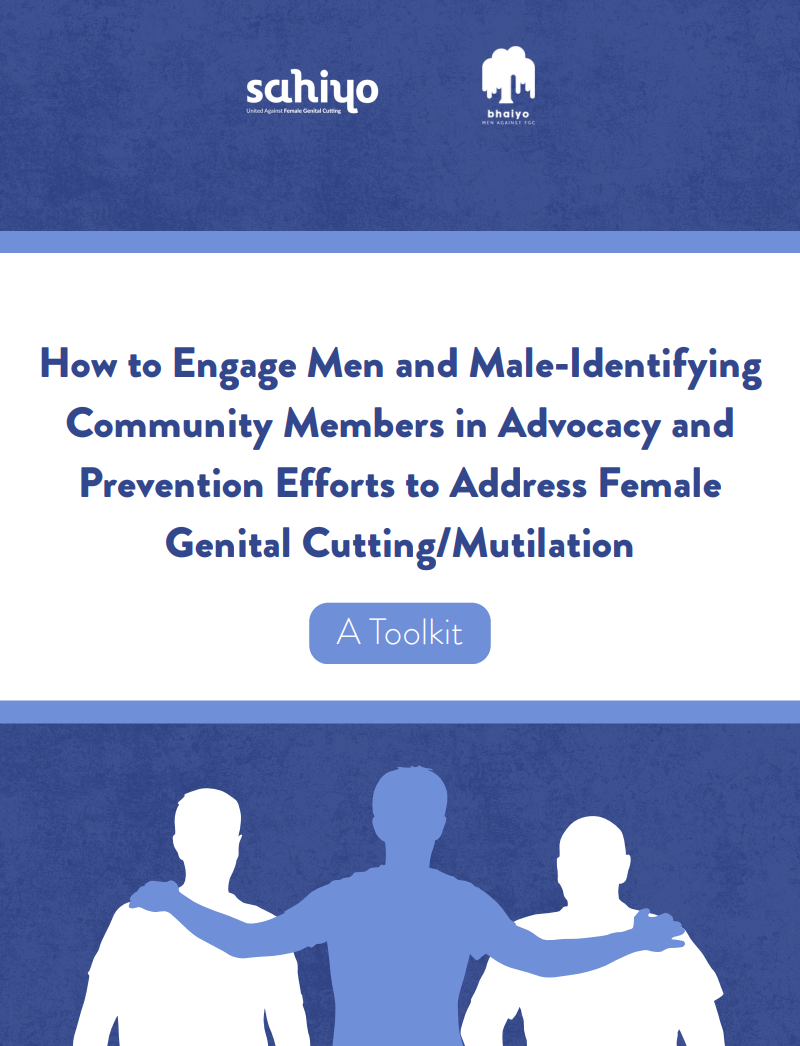
Here at Sahiyo, we believe that ending female genital mutilation/cutting (FGM/C) requires the participation of all members of the community—including men and male-identifying individuals. That’s why we’ve created the How to Engage Men and Male-Identifying Community Members in Advocacy and Prevention Efforts to Address Female Genital Cutting/Mutilation toolkit, a practical resource designed to help advocates, community-based organizations, practitioners, and the general public to meaningfully engage men as allies in efforts to end FGM/C.
While women and survivors have long led the movement to end FGM/C, there remains a significant need to involve men and male-identifying individuals in ways that are thoughtful, culturally responsive, and survivor-centered. This toolkit brings together evidence-informed strategies, real-world case studies, and practical guidance drawn from initiatives across Africa, Asia, and other regions. It was developed to address a growing gap in resources for organizations seeking to engage men effectively while ensuring that survivor voices remain at the center of advocacy and prevention efforts.
Why Male Engagement Matters
Ending FGM/C requires changing the social norms, beliefs, and power structures that allow this form of gender-based violence to continue. Men often influence family decisions, community attitudes, religious discourse, and public policy, making their engagement an important component of long-term prevention efforts. When equipped with accurate information and meaningful opportunities to participate, men can become powerful advocates who challenge harmful norms, support survivors, and help create safer communities for girls.
At the same time, meaningful engagement goes beyond simply inviting men into the conversation. It means creating spaces where they can learn, ask difficult questions, reflect on gender norms, and recognize their role in advancing gender equality. Effective male engagement is rooted in partnership—not replacing survivor leadership, but strengthening it by encouraging men to become informed allies who amplify, rather than overshadow, the voices of women and survivors.
A 2024 evaluation of Sahiyo’s Bhaiyo Male Allies program found that 40% of participants were unsure whether FGM/C occurred within their own communities, and more than 30% did not know of safe spaces where the issue could be discussed. These findings highlight the need for greater awareness and practical resources that help men take meaningful action.
What’s Inside This Toolkit?
We recognize that there is no one-size-fits-all approach to engaging men. Communities differ in culture, history, religious context, and social norms, requiring strategies that are adaptable and community-led. This toolkit provides practical guidance to help organizations design effective male engagement initiatives while navigating these complexities.
Inside, you’ll find:
- Evidence-informed strategies for engaging men and male-identifying individuals in FGM/C prevention and advocacy.
- Case studies highlighting successful initiatives from diverse cultural and regional contexts.
- Practical recommendations for designing survivor-centered and culturally responsive programming.
- Guidance on navigating common challenges, addressing resistance, and fostering sustainable community engagement.
Whether you’re launching a new initiative or strengthening an existing program, we hope this toolkit serves as a valuable resource for building partnerships, fostering dialogue, and supporting men in becoming effective allies in the global movement to end FGM/C.