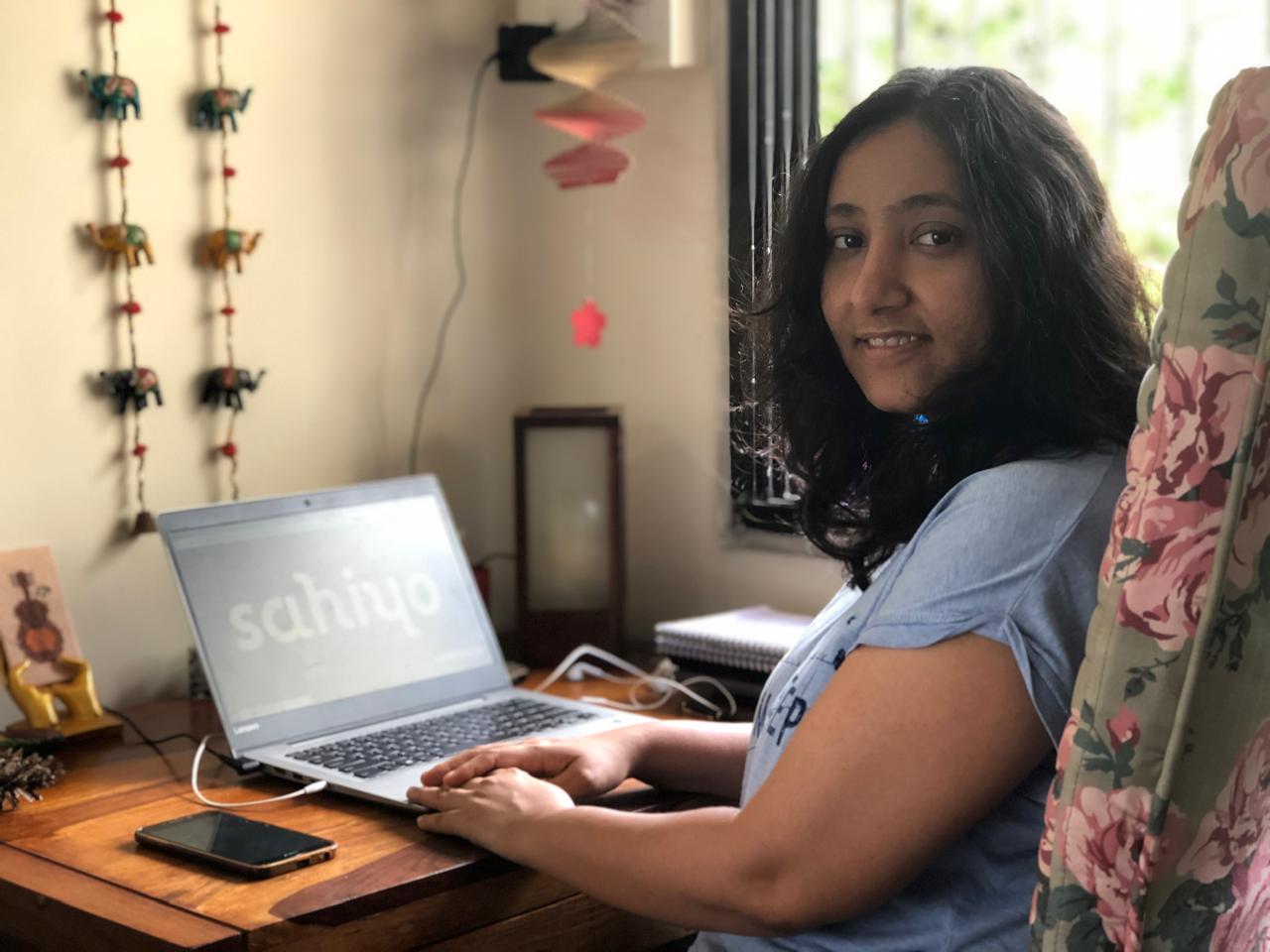
About the Founder: Aarefa Johari is a journalist, feminist, activist, and aspiring violinist based in Mumbai, India. She has been publicly speaking out against Female Genital Cutting since 2011 and was listed by News Deeply as one of six global experts on FGC to watch out for in 2017.
- How did you all come together as five co-founders and start Sahiyo?
Around 2011 I was working as a journalist at the Hindustan Times, and an anonymous Bohra woman launched a Change.org petition asking the Syedna, the Bohra community leader, to end the practice of khatna, (female genital cutting). The petition outlined the harms of FGC and gained significant media attention.
The issue struck a personal chord. I had never publicly voiced my stance, but I’d had many arguments with my mother during my college years, after learning the full extent of what had happened to me as a child. When journalists started looking for Bohra women willing to speak out, I realized I felt strongly enough to go public. No one in my immediate family tried to stop me — even if they had, I doubt it would have mattered.
Eventually, filmmaker Priya Goswami reached out to me. She was studying at the National Institute of Design and working on a documentary called “A Pinch of Skin,” which became the first film on FGC in the Bohra community in India. I ended up sharing my story in Priya’s documentary.
The film’s release brought more media attention. Around this time, Insia connected with me through social media. She was working on a film script on the issue of FGC and we began talking. Eventually, Priya, Insia, and I started collaborating more closely. Priya had separately connected with Mariya Taher and Shaheeda Tavawalla-Kirtane and brought them in too. Our conversations eventually evolved into what would become Sahiyo.
- What were your initial goals or hopes for the organization and how has the organization’s vision evolved since its founding?
What we wanted to do was work with the community directly and set a long-term goal of trying to change people’s mindsets about FGC through education, engagement and awareness. At the time there was no data on FGC in India or FGC in the Bohra community. And we can’t really do anything without data. So we decided to launch the first ever quantitative survey on FGC in the Bohra community.
We had responses from around the world and through that study learned there was an 80% prevalence rate of FGC in the Bohra community. The research was one part of our work, and the second part was using our website as a platform to give people space to share their own stories. We started a campaign called Each One, Reach One, where we tried to get people to break the silence by just having a conversation about FGC with at least one other person. Simultaneously, there was a case on FGC involving members of the Bohra community in Australia, which caused quite a stir among Bohras worldwide. Community leaders were trying to keep this case under wraps and not let news of it spread. So we started amplifying it, getting people to ask themselves, “Is this ok to do to our girls?” That was a major talking point for many years, and since then we’ve only expanded the ways in which we talk about this issue.
- What moments over the past 10 years are you most proud of?
It’s really difficult when you’re burnt out, when you’re juggling your day jobs, and there’s so much on your plate and you always feel like you’re not moving forward. Changing an entire social norm is a very, very, very slow moving process.
But then there are moments when you run into someone who’s been impacted by Sahiyo’s work, and you realize that we’ve actually done a lot. There was no movement 10 years ago. And now there is.
We’ve successfully broken the silence on a very secretive topic. Of course, we have a long way to go, but there was a time where almost nobody was willing to openly talk about it, and now we’ve had so many survivors share their stories, on Sahiyo’s platforms or elsewhere.
- As you reflect on the last decade, what are some of the most valuable lessons and insights you’ve gained?
I’m proud of the fact that we keep trying to learn from our own mistakes and missteps.
We worked to sensitize the media because that is something that was missing. We’ve worked to come up with so many resources for not just survivors and community members but also people who are working as activists in this space so that they can look after themselves. And we’ve tried our best to put the well-being of survivors at the forefront of what we do and the well-being of anyone who’s speaking out. I think we ourselves, the founders, learned a lot of lessons along the way, which I’m really proud of. Through it all we’ve created a family and a community within this movement.
- What does it mean to you that Sahiyo is celebrating its 10-year anniversary?
It feels surreal that it’s been 10 years! I mean, we’ve all been through a lot in the past 10 years, including a pandemic. We’ve been on this journey together and there are a lot of things that we’ve achieved, and there’s even more things we want to achieve in the future.
- In what ways have you seen the anti-FGC and gender-based violence activism space change and evolve over the past ten years?
When we started, Asia was not on the map in terms of global FGC, and now we’re actively working with the UN to address this topic in Asia. We now have the Asia network to End FGM/C. We have been at the forefront of a lot of global activism, particularly the team in the US.
So that’s a big change.
We also discovered that the Bohra community is not the only one in India that practices FGC. After we started Sahiyo, we were able to conduct an investigation that confirmed the prevalence and practice of FGC among some communities in the state of Kerala. Knowing that this practice happens in so many communities within Asia is a huge change in the movement.
- How does Sahiyo fill a gap in the global movement to end female genital cutting (FGC)?
I think that we played a very pivotal role in bringing FGC in India and Asia as a whole into the limelight. And we created spaces for so many survivors and allies to share their stories. When it comes to storytelling as an approach, I believe we are at the forefront and we’ve done probably the most in the Asian context for uplifting women’s voices, survivor’s voices, and creating solidarity through storytelling. We’ve also done a lot in terms of new research. From our very first study to our latest ‘Critical Intersections’ project, the research that we’ve been doing lately has been the first of its kind within the movement.
- How would you like to see Sahiyo change and grow over the next 10 years?
I would like to see our organization do more work at the grassroots level in India, and reach more and more community members. That is something that we’ve not been able to do too much because of funding constraints. Funding is never easy, but nonetheless that’s something I would like to see.