By Priya Voetsch
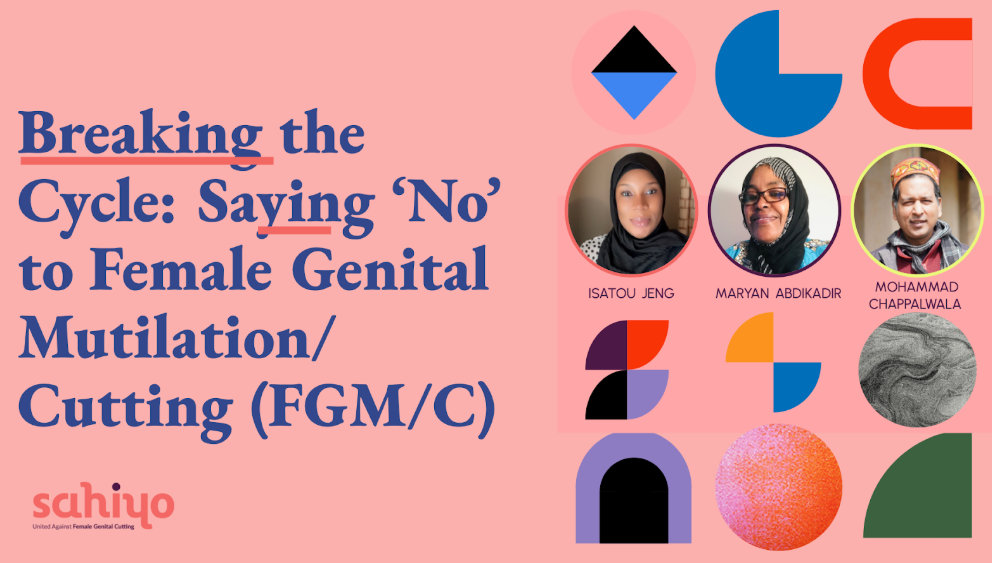
On May 29th, Sahiyo’s Programs and Events Coordinator, Samman Masud, and Program and Events Intern Priya Voetsch, moderated a webinar titled, “Breaking the Cycle: Saying ‘No’ to Female Genital Mutilation/ Cutting (FGM/C).” This webinar brought activists and advocates together to share their experiences and strategies for encouraging parents, families, and communities to end the harmful cycle of FGM/C. Panelists included: Maryan Abdikadir, Isatou Jeng, and Mohammad Chappalwala, all of whom showcased the unique experiences they had with encouraging parents, families, and community members to ‘say no’ to FGM/C.
The webinar included presentations of both Maryan’s and Isatou’s Voices to End FGM/C videos, touching on their experiences working to end the practice within their own families. Panelists also shared how they became involved in advocacy and activism to end FGM/C, in addition to their own experiences learning about the harms of this form of gender-based violence. During the event, both Maryan and Isatou, parents who chose to not have their daughters undergo FGM/C – noted how difficult that choice was and how they navigated this decision and discussion with family and community members about not continuing FGM/C with their children. While, Mohammad discussed his work engaging men and boys and how he approached a case in which a parent in their community was concerned that their former spouse would decide to subject their daughters to FGM/C.
One of the main takeaways from the webinar was the pressures that families and parents experience when faced with the decision of whether or not to have their child undergo FGM/C. These pressures culminate in a fear of rejection and shame by their community as a result of choosing to refuse the harmful act, alongside the belief that FGM/C supposedly improves women and girls’ genital hygiene. However, one of the main approaches to dismantling the belief that FGM/C is a necessary procedure, is exposure to experiences that challenge the normalcy of the practice. Working to understand the specific conceptualizations and feelings of family members involved in the decision to continue FGM/C and making space for the emotions involved in that decison allows for there to be a continous conversation about FGM/C in these family circles.
The audience was highly engaged, with many thanking the speakers for sharing their personal experiences in abandoning FGM/C within their own families and communities.
Watch the full webinar below to learn more about their experiences working to break this cycle within their own circles.
[youtube url=”https://youtu.be/qswpuhpJGrw”]