In December 2025, Sahiyo will celebrate its 10th anniversary, and we’re hosting a 6-month campaign to mark the occasion! Starting July 2025 and running through December 2025, we’re highlighting our programs, reflecting on our accomplishments, and planning for the future.
This month, we’re highlighting Sahiyo’s Research program. The Research program seeks to close the gap in underresearched areas when it comes to understanding FGC and its reach and impact.
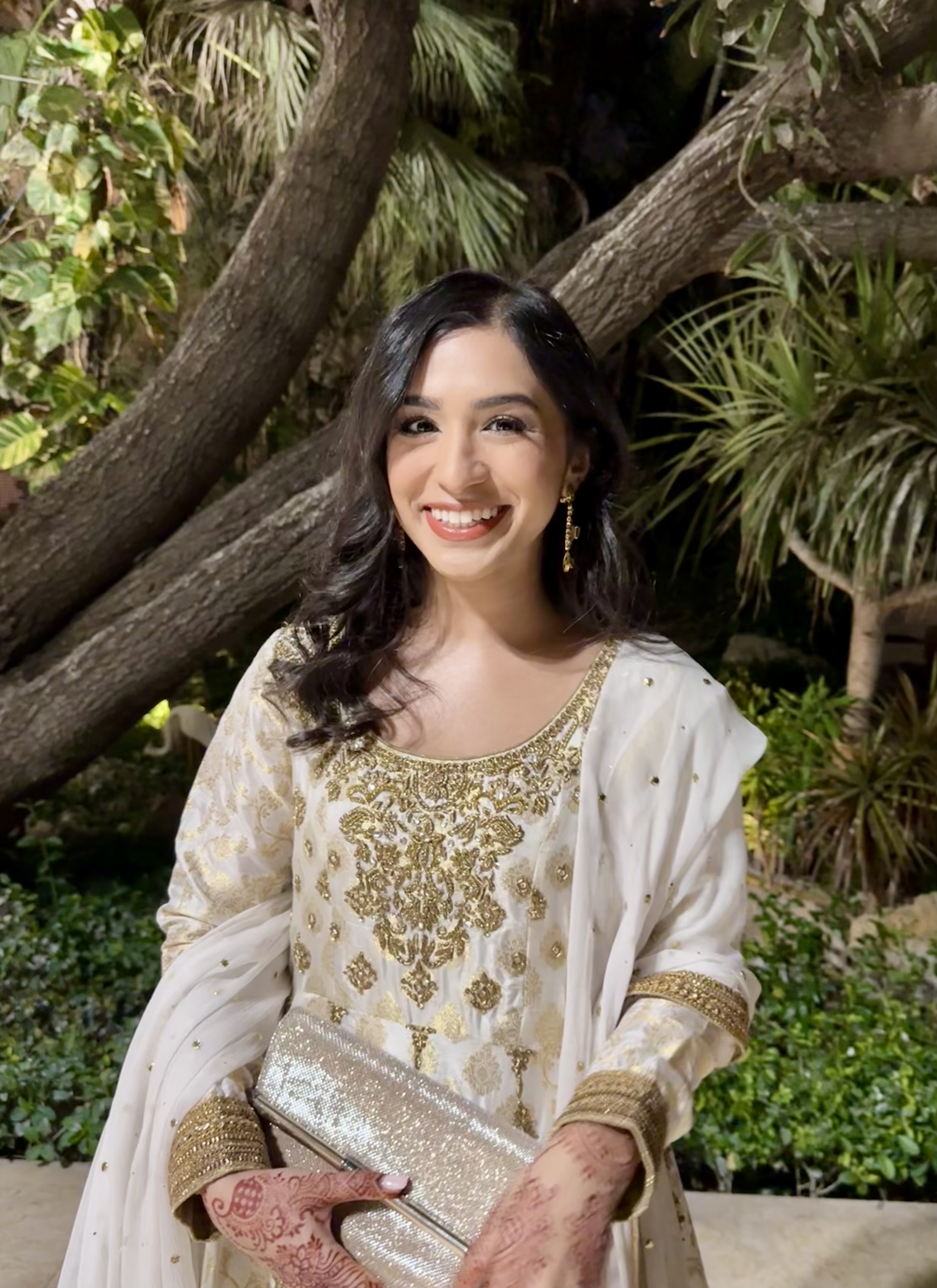
In this spotlight, Naquia Unwala, a third-year medical student at Georgetown University School of Medicine, a Research Associate at Cornell University, and a Sahiyo volunteer who led the qualitative analysis for our Critical Intersections Research Project, reflects on her involvement with our research program.
- When and how did you first get involved in Sahiyo’s Research program?
I first became involved in Sahiyo’s Research Program in 2022 as a volunteer with the Critical Intersections project. Although I grew up in a community where female genital cutting (FGC) is practiced, I didn’t learn about the practice until I took a women’s health class in college. Through conversations with my mother and grandmother, I came to realize that nearly every woman in my family is a survivor of FGC, except for me. That realization deeply shaped my commitment to advocacy in ending this harmful practice and supporting survivors. After graduating from college, I began my role as a Research Associate at Cornell University, and I reached out to Sahiyo to contribute to their research efforts.
- What was the nature of your student research with Sahiyo? What was your topic, methodology, and overall findings?
The Critical Intersections project is dedicated to exploring key areas of intersecting themes and identities within FGC through in-depth interviews and surveys with activists and stakeholders in the field. The aim of Sahiyo’s research is to understand how various social, cultural, and political factors intersect and impact marginalized communities affected by FGC. Ultimately, this research seeks to uncover opportunities for connecting social justice movements that can drive meaningful change to end FGC.
As the lead for the qualitative analysis of the Critical Intersections Research Project, I was responsible for analyzing the data and writing the report. I also took part in conducting in-depth, semi-structured interviews with key figures in the anti-FGM/C movement and advocates working to end gender-based violence. Together with a team of volunteers, we qualitatively coded the interviews, identifying major themes—such as racism, religious discrimination, and other social issues—related to the intersectionality of FGC.
The overall findings of the research highlight the intersectional role of race, gender, sexual orientation, and other social issues in the work to end FGM/C. This project also demonstrates a clear desire among advocates and organizations in the anti-FGM/C movement to collaborate with other social justice movements to improve outcomes for survivors of all backgrounds. Lastly, the research project provides recommendations to advocates and organizations to build cross-collaborative movements that address social inequity related to FGC.
- What is something you learned about FGC and the movement to end this harmful practice through your research with Sahiyo?
One of the most powerful lessons I’ve learned through my research with Sahiyo is the critical role that language and framing play in both perpetuating and challenging FGC. Language shapes how people understand FGC, justify it, or resist it. For instance, in one interview, a survivor explained how the practice is often justified by community members by distancing it from what is labeled as “FGM/C” and instead calling it something less harmful or “not the same” as what’s practiced in “African communities”—revealing how racism and stigma are weaponized to deflect accountability while reinforcing harmful stereotypes.
I also learned how the movement can exclude survivors whose experiences don’t fit into dominant narratives, particularly genderqueer survivors who often are excluded in both research and advocacy. Their voices revealed how essential it is to expand our language and frameworks to be more inclusive, especially when U.S. legislation has, at times, dangerously conflated FGC with gender-affirming care.
Even the terminology (FGM vs. FGM/C vs. female circumcision) carries weight and consequences. In Singapore, for example, framing the practice as religious rather than medical shifts the focus away from bodily autonomy and public health. These insights pushed me to think more deeply about the implications of every word we use, not just in activism or research, but also in clinical spaces.
As a future physician and a member of a community that practices FGC, this experience has deeply impacted how I approach conversations about the practice. The language I use when speaking with patients who are survivors will need to be trauma-informed, inclusive, and culturally sensitive. Ultimately, I’ve come to see language as both a tool and a responsibility in this movement: it can exclude or empower, retraumatize or heal. Being intentional with it is a critical part of how we work towards justice.
- What impact has the work you’ve done with the Sahiyo Research program had on your life, either in your career or personal interests?
My work with the Sahiyo Research Program has had a profound impact on both my career goals and personal journey. As a future physician, it deepened my commitment to providing trauma-informed, culturally sensitive care to survivors of FGC and other forms of gender-based violence. It also broadened my understanding of how deeply social, racial, and gendered injustices are woven into health outcomes.
Personally, being part of this research allowed me to reconnect with my own community’s history in a more informed and compassionate way. It strengthened my commitment to advocating for change both within my community and in broader public health spaces. I now see my role as a physician not just in treating patients, but in advocating for systemic change, and this work has shown me how powerful the intersection of medicine and activism can be.
- Would you recommend other students conduct research with Sahiyo?
Yes, I would highly recommend other students conduct research with Sahiyo. This experience helped me grow not only as a researcher but also as an activist. Engaging with advocates across the gender-based violence prevention field and beyond reshaped my understanding of FGM/C, particularly how it intersects with broader systems of oppression and identity. The project emphasized the importance of cross-movement solidarity and showed me how advocacy against FGM/C can be strengthened through intersectional and collaborative approaches.
- What words of wisdom would you like to share with others who may be interested in supporting Sahiyo and the movement against FGC?
My advice to anyone looking to support Sahiyo and the movement to end FGC is to recognize that change, especially within practicing communities, is a deeply personal and challenging process. Being from a community that practices FGC, I understand the social pressures and the backlash that can come with challenging the practice and other harmful gendered norms. But it’s crucial that we, as members of these communities, are at the forefront of this work. Our voices are essential in guiding the conversation, not only to break the silence around FGC but to empower others to have difficult yet necessary conversations with their families and communities. Supporting the movement means standing in solidarity with all of those who are affected by FGC. It also means listening, learning, and creating spaces where people feel safe to speak out and work toward change.
About the Author: Naquia Unwala is a medical student at Georgetown University School of Medicine with a B.A. in Public Health from the University of Michigan. At Georgetown, she leads street medicine outreach for people experiencing homelessness, is involved in research on HIV prevention, and does health advocacy for refugee and immigrant communities. She also works as a Research Associate at Cornell University’s Public Health Governance Lab, where her research focuses on homelessness policy, disaster response, and public health politics.
Naquia has been a volunteer with Sahiyo since 2022. As part of the Critical Intersections Research Project, she led the qualitative data analysis to help amplify the lived experiences of those affected by female genital cutting (FGC) and explore how FGC intersects with other forms of gender-based violence and social oppressions. She is deeply committed to ending gender-based violence, supporting immigrant and refugee communities, and promoting cultural humility in health care.
In her free time, she enjoys oil painting and trying new coffee shops around Washington, D.C.