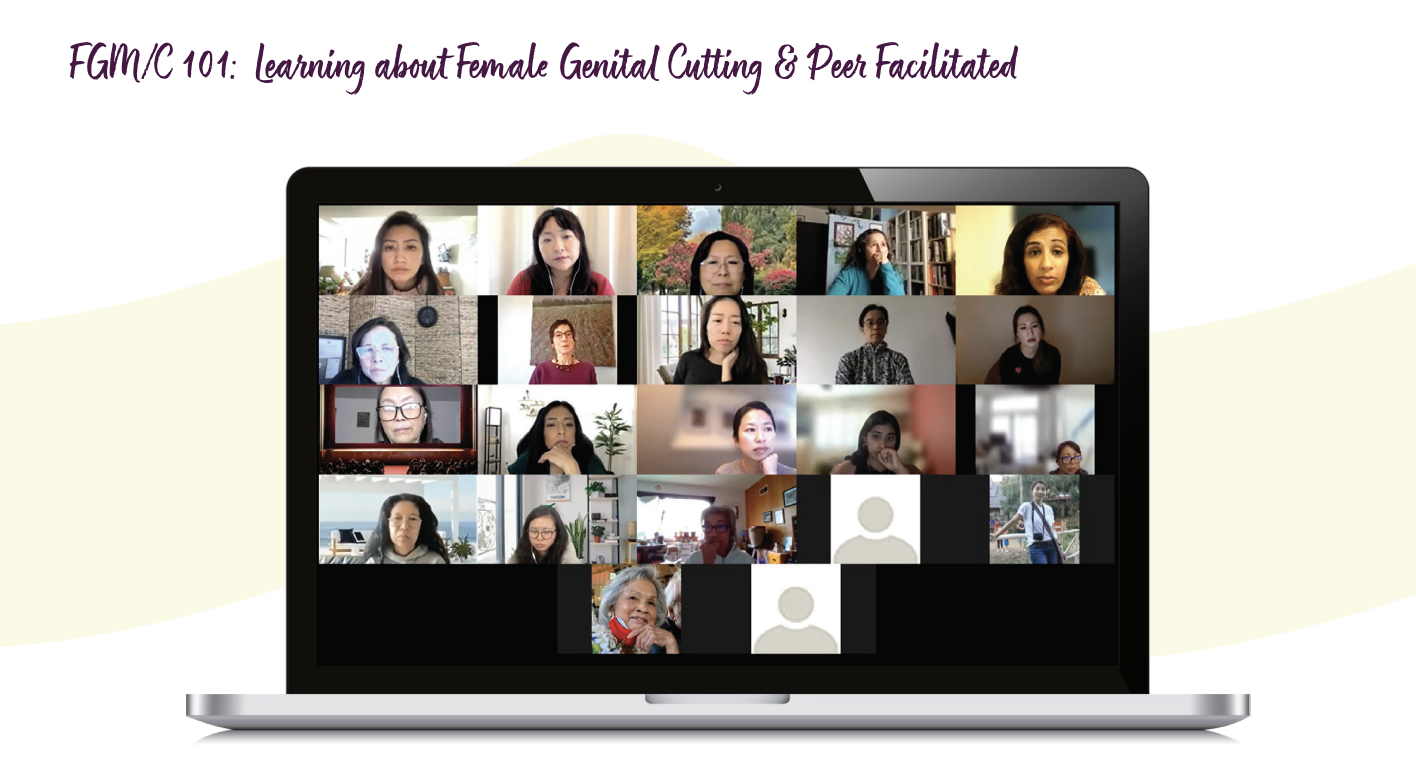
Sahiyo is proud to share a new case study, Using Storytelling to Build Capacity for Cultural and Community-Based Organizations to Support Survivors of FGM/C, produced in collaboration with the Asian Women’s Shelter (AWS) and Silence Speaks. This case study reviews a three-year collaboration focused on using culturally grounded, trauma-informed methods to support female genital mutilation/cutting (FGM/C) survivors and building the capacity of gender-based violence (GBV) organizations to provide trauma-informed support. By integrating storytelling, community outreach, and professional training, this project broadened its impact nationwide, fostering a network of informed practitioners and offering a model for culturally sensitive survivor support.
The lessons learned during this project informed several key insights, which have been grouped thematically to highlight the essential elements of our approach and their impact:
- Survivor-Centered Approach: By incorporating survivor stories into the training—through digital storytelling and lived-experience narratives—we not only raised awareness but also informed the development of resources and services that respond to survivors as whole individuals, rather than solely as victims or survivors.
- Bridging FGM/C and GBV: To meet the specific needs of service providers, we tailored our training to link FGM/C with broader GBV topics. This approach enabled providers to apply their existing skills in new contexts, deepening their understanding of FGM/C as a form of GBV while diversifying their approaches to survivor support.
- Trust-building: Leveraging existing relationships within the community proved invaluable for identifying the right partners, establishing a shared mission, and securing essential support for this project. These trusted connections helped break down logistical, most importantly, cultural, and social barriers that might otherwise have limited participation over the 3 years of this project.
- Cultural Competency: Ongoing cultural competency training among facilitators and support staff not only strengthened the program’s credibility but also enhanced AWS’s reputation for providing reliable, sensitive support.
The collaboration between AWS, Sahiyo, and Silence Speaks offers a replicable model for integrating support for FGM/C survivors into broader GBV services. The following recommendations highlight key strategies and practical steps based on lessons learned from this partnership:
- Conduct Baseline Assessments: Assess your organization’s current knowledge, comfort levels, and preparedness on being able to provide services related to FGM/C to understand where to start and how to design effective interventions.
- Adapt Existing Services to Include FGM/C: Consider adapting existing GBV services to include FGM/C survivors.
- Partner With Experts and Individuals with Lived Experience: You don’t need to be an expert in FGM/C to get started—partner with those who are.
- Provide Staff With Practical Tools: Your staff need the right tools to support survivors. These can include FAQs, referral lists, and practice scenarios.
- Engage With the Community: FGM/C is a sensitive topic, and engaging communities impacted by it requires trust and cultural understanding.
- Evaluate Progress: Evaluation helps you understand what’s working and where to improve.
Read the full case study here to dive deeper into the three-year collaborative project, and learn more about how storytelling, community outreach, and professional training help gender-based violence organizations provide trauma-informed care to survivors of FGM/C.