On February 23rd, 2026, the Human Rights Council convened for a high-level panel discussion on the role of digital technologies in preventing and eliminating female genital mutilation (FGM). The panel brought together senior representatives from United Nations entities, member and observer states, and civil society to examine how digital innovation can help accelerate efforts to end FGM. Panelists for the event included:
- Catherine Russell, Executive Director at UNICEF, Diene Keita
- Executive Director at the United Nations Population Fund (UNFPA)
- Pascale Allotey from the World Health Organization
- Irene Kaggwa of the International Telecommunication Union
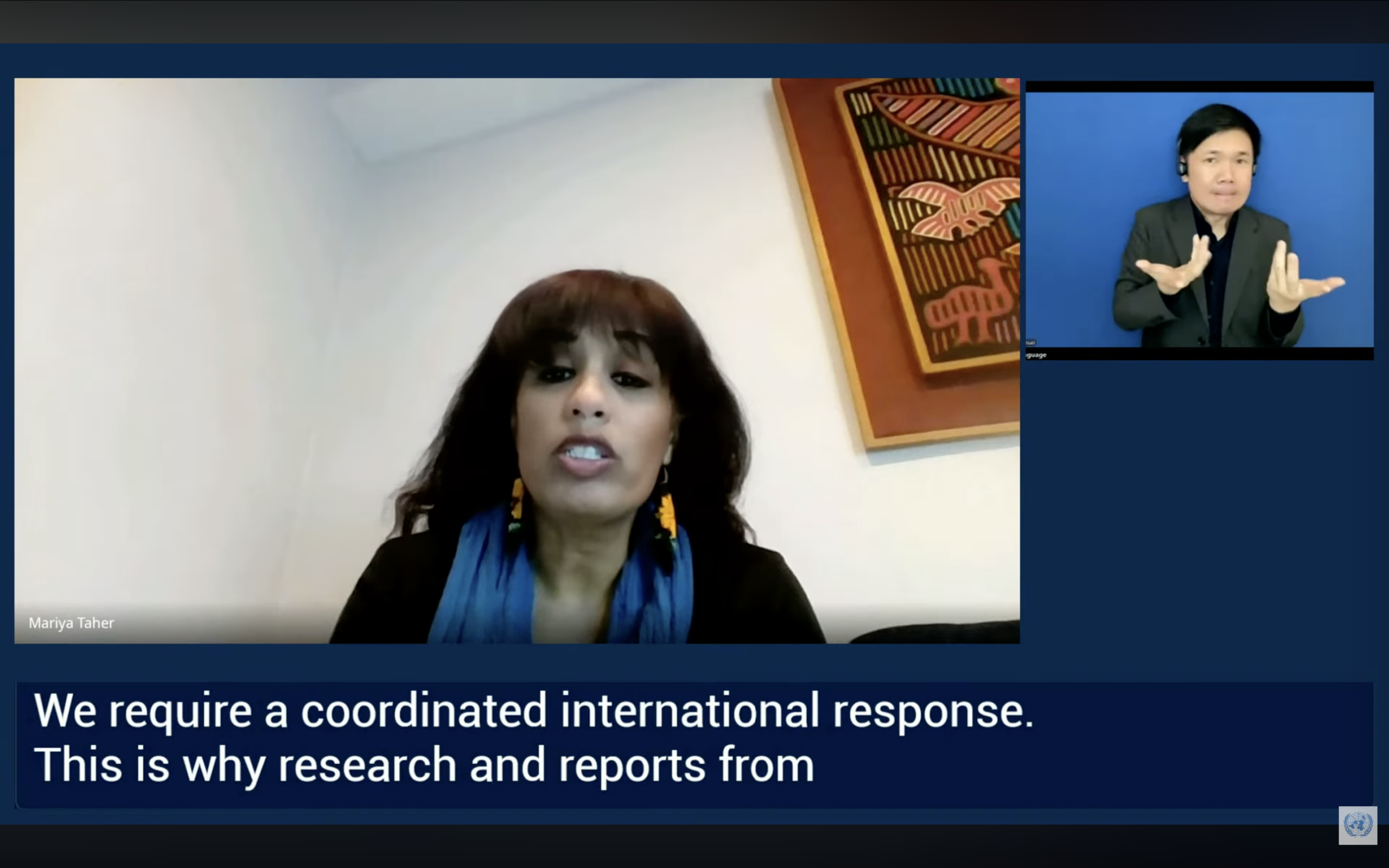
Opening statements for the event were delivered by Volker Türk from the United Nations High Commissioner for Human Rights, and Sahiyo’s own Executive Director, Mariya Taher. In her statement, Mariya discussed how technology can be a powerful tool for addressing FGM/C globally, so long as it is used with integrity and care for survivors.
“As communities migrate, FGM/C has become a transnational issue requiring a coordinated international response. This is why research and reports form the U.N. – such as the report on Cross Border Transnational FGM/C – are so vital. Sahiyo leverages digital platforms – from secure messaging to virtual support groups – to build networks that mirror this transnational reality, ensuring that survivors and activists are connected across the borders highlighted in these very reports. Communications technology has allowed us to extend our reach in myriad ways and, as we’ve done so, we’ve also recognized that the use of these technologies must be rooted in principles of safeguarding dignity, privacy, and agency.”
“One of our most well-known initiatives utilizing technology is the Voices to End FGM/C digital storytelling project. Through this program, survivors and advocates find safe spaces where they can share their experiences with one another. We support them in learning how to piece together a two-to three-minute video by creating storyboards, learning video editing skills, and recording content on their smartphones. They use these digital platforms to share their lived realities in their own words and on their own terms.
Today, we have over 80 videos in the collection. Most importantly, the use of technology does not end with their creation of the stories. After these stories are produced, they are integrated into professional training and technical assistance programs for healthcare professionals, educators, and service organizations through online training modules.”
Watch the rest of Mariya’s opening statement here:
This discussion represents an important step forward in understanding how technology can help us address FGM/C on a global scale, while still respecting survivors wellbeing’ and privacy.