By: Asha Oud
When I was a kid, I didn’t feel like my body was mine.
My childhood took that further: I was actively taught that my body was something to be ashamed of.
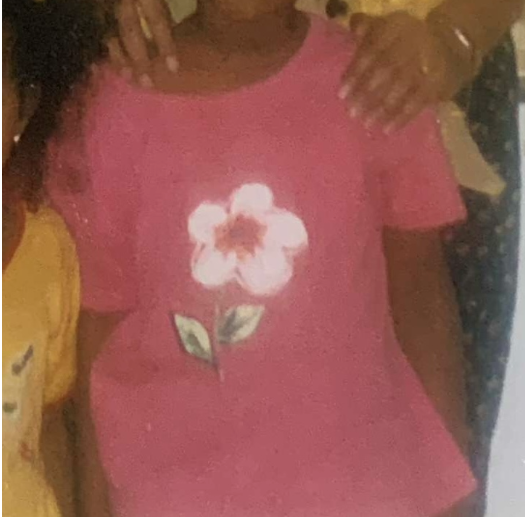
I wore a pink hijab that went to my knees at religion school, (dugsi, as Somalis call it), when I was around 7 years old. I had on a matching pink t-shirt with a drawing of a hibiscus; I liked the colors to match. One Qur’an teacher noticed my exposed elbow when I raised my hand. Girls weren’t supposed to show their arms and typically wore long sleeves under their hijabs. He hit me sharply with a cord until my face was drenched in tears. For showing my 7-year-old arms.
For years, I had mostly buried memories like this. But lately, researching Somali history has brought them flooding back. I keep seeing a throughline that connects my own experiences to people across my culture and beyond: this sense that my body was never fully mine to make choices for. Decisions about how it looked, moved, and used were made by other people, for reasons that had little to do with me.
I heard it dozens of times growing up — from parents, aunts, uncles: “Who will marry you if you don’t learn how to cook and clean?” As if those skills weren’t useful for their own sake, rather for whoever I’d eventually belong to.
I was being prepared, in other words, to belong to someone else before I belonged to myself—an empty vessel for labor, shaped by whoever I might end up with, containing little room for what I wanted. My choices about my body, what to wear, how to move, what skills to spend my time on, weren’t really mine to make. They were investments made on my behalf, for a future owner.
The Origins of the Cut
This logic has a history longer than my own family. Researching pre-colonial Africa and the Indian Ocean world, I found that the modern justifications for FGM/C — chastity, fidelity, marriageability — trace back to the Red Sea and Indian Ocean slave trade. Some historical and anthropological accounts link the practice of infibulation to the Red Sea slave trade, where it was used to signal virginity and increase the perceived value of enslaved girls. In those accounts, infibulated girls were believed to be more likely to remain chaste and thus more valuable to enslavers. Women’s bodies were modified to increase their value to the people who would own them.
Over time, similar logics extended beyond slavery into broader social and marital systems. Families continued to infibulate their daughters to make them attractive as marriage partners to men who could provide for them. What had once been done to enslaved women’s bodies became something families did to their own daughters’ bodies: the same logic, redirected from sale to marriage, the same removal of choice.
It wasn’t until my sister mentioned it a couple months ago that I realized I had been cut. It wasn’t the “serious” kind — it was “just sunnah,” which is what many Muslim communities refer to Type 1 FGM/C as, a framing that places the decision within religious observance and outside of question.
With a prevalence rate over 90% in Somali communities, this is also likely true for many women around me. Each of us carried a decision none of us made, some of us without even knowing the weight of what we were carrying.
Even setting consent aside, the decision doesn’t deliver what it promises. Instead, research consistently links FGM/C to chronic infections, complications during childbirth, and long-term sexual dysfunction, with no known health benefits.
Beyond FGM/C
This isn’t unique to Somalia. Over 240 million people worldwide have undergone FGM/C, and it’s still practiced globally today. This is also not unique to FGM/C. The underlying pattern, someone else deciding what happens to a child’s body, is far more widespread than the practice itself. As an American, I think about the latest trends of women destroying themselves over beauty standards always out of reach.
Girls in Imperial China had their feet bound to the point of permanent disability, a decision made by mothers, for daughters, generation after generation, before any of those daughters could weigh in.
I think of a mother sending for the circumcising woman, (ngariba, wanzama, ngaka), and paying the most money for any event in her daughter’s life apart from her wedding, to have her daughter’s pleasure center maimed and sewn shut with an acacia thorn. All for the chance of someone wanting her daughter, and saving her from the social exclusion of being undesirable, of being uncut.
I think of a child being instructed by a parent to pursue an eternal weight loss journey, developing an eating disorder to stay appealing to a society that values thinness. Being praised, sometimes for restricting food, often before they’re old enough to understand what’s being asked of them.
In each case, a child’s body becomes a site where someone else makes a decision, for desirability, for safety, for belonging, before that child has any standing to weigh in.
I think about wearing my hair out for the first time, alone. It was a spring day, my senior year of high school. I’d never gone outside without a hijab since I was a young kid, so I took advantage of the time my parents were out. I put on a leather jacket and jeans and straightened my hair. It felt like I was naked. My mom would actually tell me I was naked if my arms were out past three-quarter sleeves, or if I had pants on, so this was even more of a stretch. I headed to town and walked around the shopping area. It felt like every eye burned into me, although I didn’t have an inch of skin visible. I walked into Victoria’s Secret, a place my siblings and I used to cover our eyes passing on the way to dugsi, because of the underwear-clad models on the signs outside. I didn’t buy anything, but I felt exhilarated just from being there. For doing something for my own curiosity.
I went to school the next day with my hijab and long skirt on, as if nothing had happened.
Inherited Scripts
How many decisions about our own bodies were made before we were old enough to question them? And how do we now tell the difference between what we actually want and what we were simply never given a choice about?
The decision made about my body happened in a world where a girl’s survival depended on being found valuable to someone else, and where her body was the thing she had to offer. Most of us don’t live in that world in the same terms anymore. But the decisions that that world produced are still being made, on bodies that don’t need them, by people who never stopped to ask whether the original premise still holds.
When being desired equals safety, every step toward it feels worth it. Bodily autonomy is the work of separating what you were given from what you actually want, even when they feel indistinguishable.