Between May 13th and 17th, Sahiyo, Equality Now, and The U.S. End FGM/C Network hosted a convening of FGM/C survivors, advocates, policy experts, and LGBTQIA+ allies at a retreat center in the Adirondack Mountains Participants gathered to hold conversations centered on building shared understanding and strategic messaging around bodily autonomy, female genital mutilation/cutting (FGM/C), gender-affirming care, intersex movements, and harmful conflations in public discourse and policymaking. This reflection is part of a series of reflections from participants who attended the convening:
By: Maryum Saifee
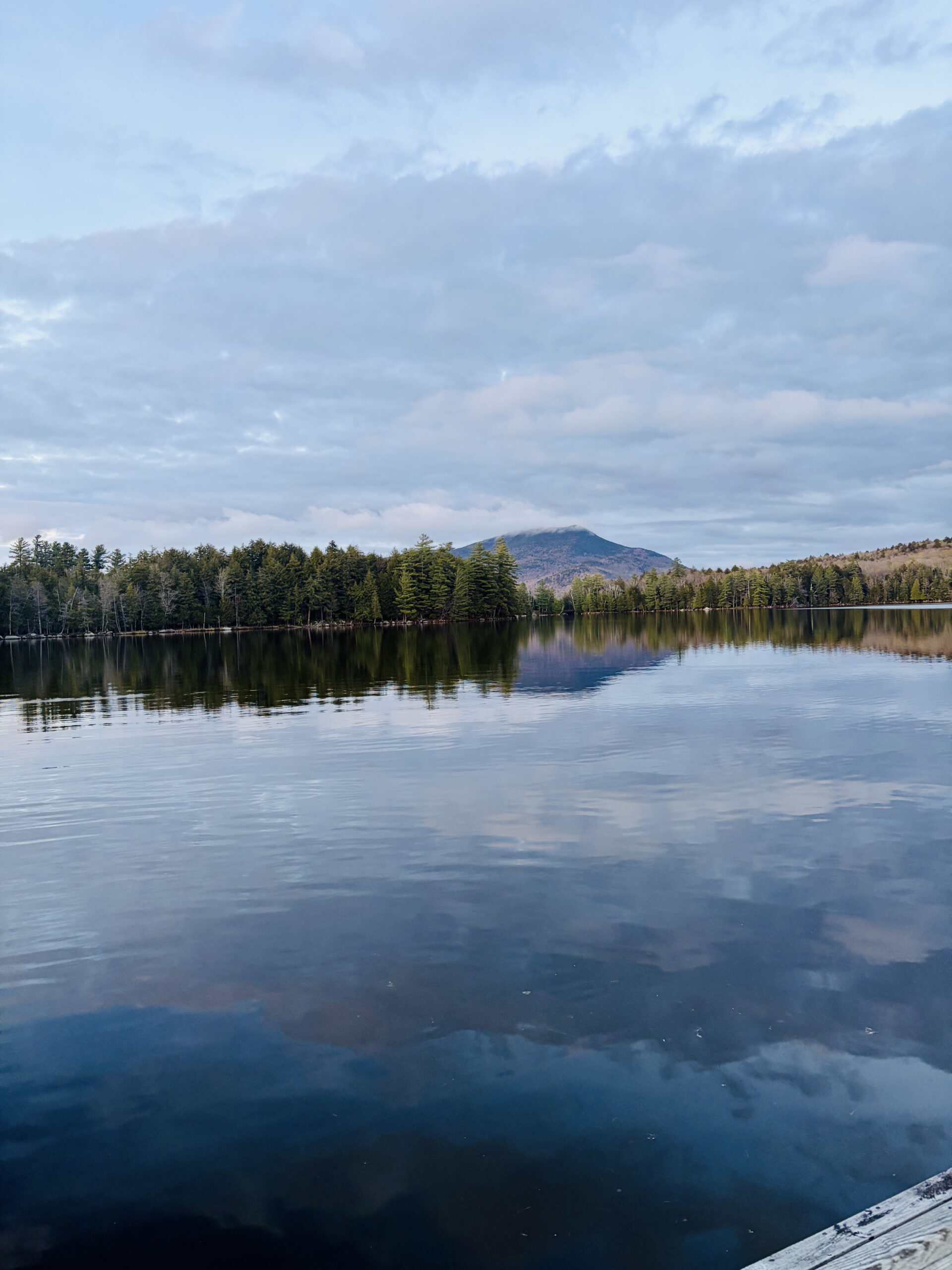
Deep in the Adirondacks, there is a space built on a fascinating contradiction. Established in the early 1900s as an enclave for Gilded Age elites—including Henry Morgenthau Sr., the former U.S. Ambassador to the Ottoman Empire—it was later transformed in the 1980s by historian Harold Hochschild’s son Adam. He turned his family estate into a sanctuary for social justice activists, writers, and artists to convene, commune, and build movements.
Adam Hochschild is the author of King Leopold’s Ghost, which chronicles the horrors of the Belgian king’s rubber-extraction regime that killed an estimated ten million people—roughly half of Congo’s population. It is a devastating history, but it is also the story of George Washington Williams, a Baptist minister, journalist, and the first African American elected to the Ohio state legislature. Williams traveled to the region and bore witness to the atrocities that Hochschild wrote about. He pushed back against Leopold’s erasure with an open letter that coined the phrase “crimes against humanity,” sparking one of the first major mobilizations of the modern international human rights movement. Before ceding control of the Congo to the Belgian government, Leopold famously burned the state archives to erase his crimes from the historical record—but Williams’s words had already escaped from the flames.
It felt incredibly appropriate to spend five days in the Adirondacks—largely off the grid—both decompressing from the trauma of a week ago with the purge at the State Department, and being in community with fellow human rights activists.
I have spent the last decade working to end female genital mutilation (FGM), both domestically and globally—first as a survivor telling my story, and later as a U.S. diplomat at the State Department. My biggest takeaway from these five days is that this work is fundamentally nonlinear. Justice work is a pendulum that swings continually back and forth.
A decade ago, the Gambia made history by passing legislation to ban FGM. In 2024, that ban was nearly overturned. The repeal effort failed, thankfully, due to the fierce mobilization of activists on the ground—including activist and Sahiyo Advisory Board member Absa Samba, who was with me at this retreat. But the threat has not vanished; there is a current, ongoing effort to undermine the ban in Gambia’s courts. These wins are never permanent. They are forever vulnerable without sustained organizing and relentless coalition-building.
I think about the United States at this moment. For a long time, we took our democratic institutions for granted, treating them as an inevitability rather than a hard-fought system grounded in public trust. Now, with mass purges hollowing out our public service institutions, we are learning the hard way that democracy requires active defense. We have no choice but to collectively mobilize if we are to salvage what remains.
The Power of the Periphery
When institutions fracture, and the center fails to hold, the most vital resistance comes from the margins. Right now, we are witnessing a profound convergence of movements that, on the surface, might seem distinct, but are fighting the exact same battle: the anti-FGM movement and the movement for gender-affirming care.
Both are coalescing around a single, foundational principle: the absolute right to bodily autonomy.
Whether it is the human rights abuse of FGM or the legislative overreach criminalizing life-saving healthcare for transgender individuals, the core violation is identical—the state, or the community, attempting to govern, police, and alter bodies without consent.
There is immense power in these groups recognizing their shared challenges. The anti-FGM movement brings decades of global, survivor-led expertise in dismantling patriarchal control over the body. The gender-affirming care movement offers vital modern frameworks on medical privacy and the right to self-determination. By breaking down traditional advocacy silos and standing together, we form a formidable front line. It’s a reminder that an attack on one marginalized group’s bodily autonomy is never the end of the story—it is the first chapter to dismantling the rights of others.
The Work Ahead
Just as George Washington Williams refused to let King Leopold burn away historical truth, today’s activists refuse to let modern authoritarianism erase our hard-won human rights.
We cannot afford the luxury of fighting our battles in isolation. Ending FGM, protecting gender-affirming care, and safeguarding a collapsing democracy are not separate line items—they are deeply interconnected struggles for human dignity.
The pendulum has swung back, and the ground beneath us is shifting. But as I reflect on my time in the Adirondacks, I am reminded that when we build coalitions from the margins, we find the collective strength to push it forward again. It is time to mobilize.
Bio: Maryum Saifee is a former U.S. diplomat and served as Sahiyo’s inaugural advisory board chair. She is writing in her personal capacity, and her views do not reflect past institutional affiliations.
Watch the video below to learn more about this retreat!